A two-stage method for sourcing managers and brand owners: shortlist shoe manufacturing companies by category fit and verifiable capability, then verify sampling turnaround, QC documentation and production claims with concrete evidence requests before committing to an OEM/ODM program.
OEM/ODM Sourcing Guide
Most sourcing failures are not caused by a factory that cannot make shoes. They are caused by a factory that cannot make your shoes at your volume, on your timeline, with the finish your label promises. This guide sets out a two-stage method: shortlist by category fit and verifiable capability, then verify with evidence requests before you commit tooling, deposits or a launch date.
Key takeaways
- Shortlist on what a factory demonstrably runs, not on what its catalogue lists.
- Sample turnaround on a real style is the cheapest, fastest test of a supplier's actual capability.
- Ask for QC process documentation and confirm willingness to host third-party inspection.
- Category fit matters: dress shoes, heels, flats, sandals and boots each carry different construction risks.
- Confirm minimum order quantity and production lead time for your target styles with each shortlisted factory.
- Stage one: shortlist by category fit and verifiable capability
- Stage two: verify with evidence requests
- Per-category verification notes
- What a credible OEM/ODM partner confirms in writing
- A condensed shortlist-and-verify checklist
- FAQ
Stage one: shortlist by category fit and verifiable capability
The first pass through a list of shoe manufacturing companies should remove candidates quickly, before you spend time on samples or calls. Two questions do most of the work.
Does the factory run dedicated lines for your category?
A manufacturer with dedicated category production lines handles that construction every week, which is very different from a trading company that places your order into whichever workshop has space. Ask which lines exist and what they are currently running. Examples of the kind of answer that is verifiable: men's dress-shoe lines and women's heel lines as separately staffed, separately tooled production areas.
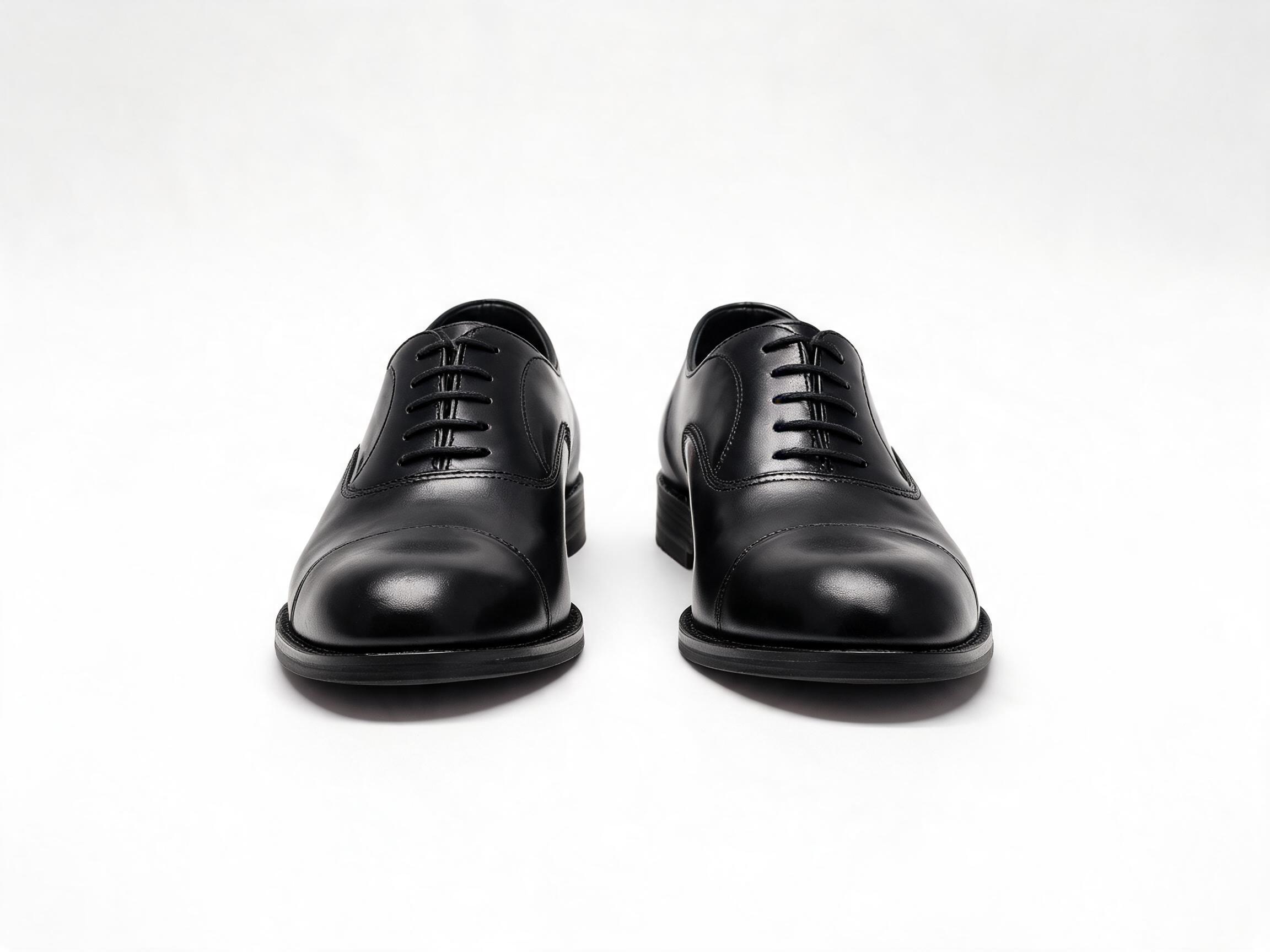
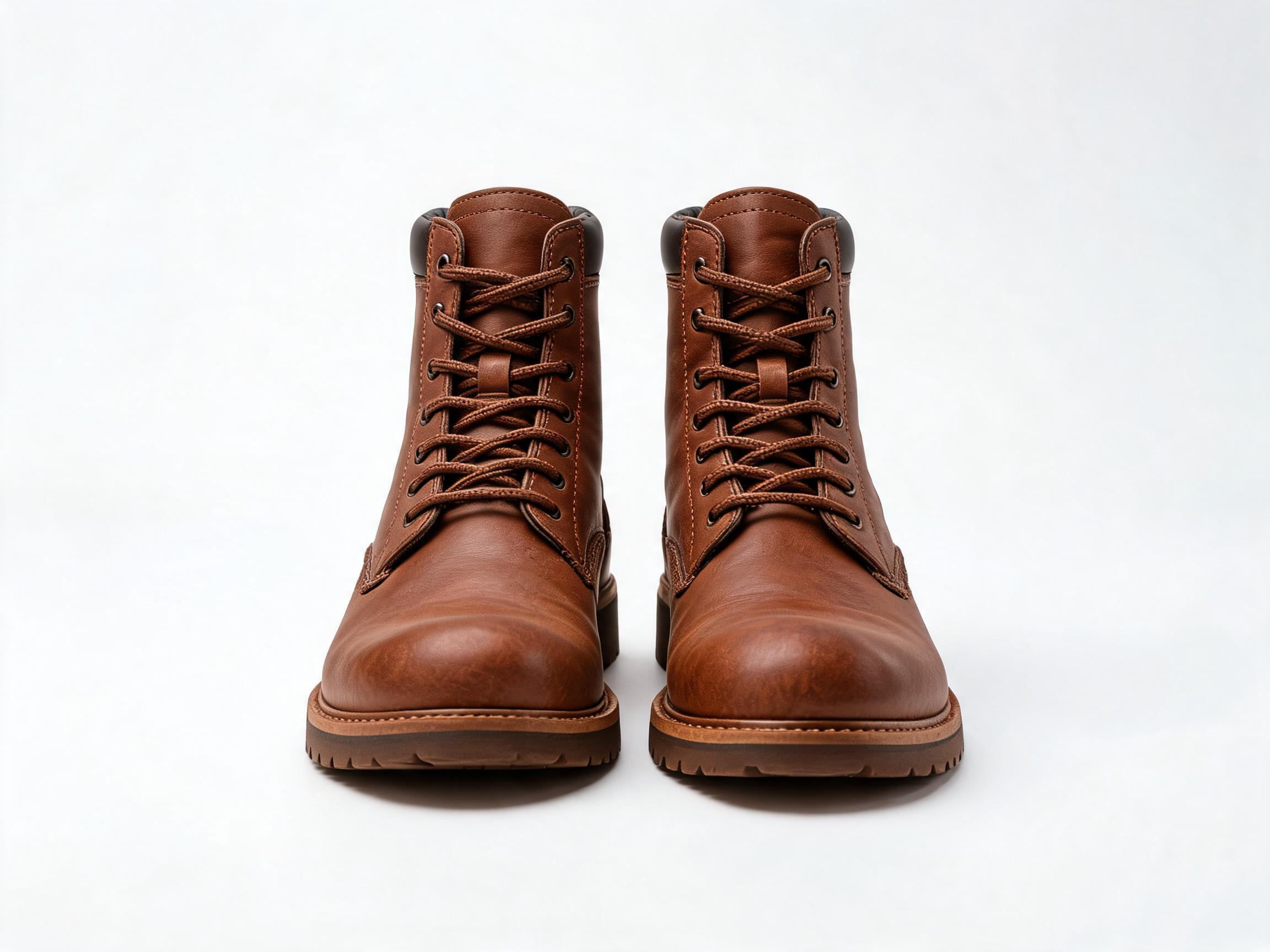
Range also tells you something. A factory that publishes a black cap-toe Oxford with a hand-stitched cap-toe seam alongside brown leather work boots is signalling that its capability extends from dress construction to heavier lace-up boot construction. That does not automatically make it right for your program, but it gives you concrete products to interrogate.
What can the in-house design team actually do with a sketch or tech pack?
"We accept OEM" is not an answer. The useful question is what the design team can convert. An in-house team that takes sketches, reference photos or tech packs and returns production-ready samples is doing engineering work: interpreting proportions, choosing a last, specifying sole bonding, flagging construction that will not hold in volume.
Test this cheaply. Send one sketch and one reference photo from your own range and ask what the factory would change to make it producible, and why. A team that responds with specific construction questions is worth sampling with. A team that responds with a price is not yet a partner.
Filter out non-manufacturers early
Ask directly whether the factory owns the lines that will make your shoes, and which production steps are subcontracted. Subcontracting is not disqualifying, but you need to know where your quality risk sits and whether the party inspecting final goods controls the steps that created the defects.
Stage two: verify with evidence requests
Shortlisting is desk work. Verification is where you ask for things that cost the supplier something to provide, because those requests separate a capable factory from a confident one.
Request sample turnaround on a real style
Do not sample a generic stock style. Sample the shoe you intend to sell. Ask two questions in the same message: how long to ship an existing sample, and how long for a customized sample after details are confirmed. For reference, published figures from an established manufacturer are 3-5 days for existing samples and roughly 7-12 days for customized samples once details are confirmed. Treat those as a benchmark and confirm each factory's own numbers in writing.
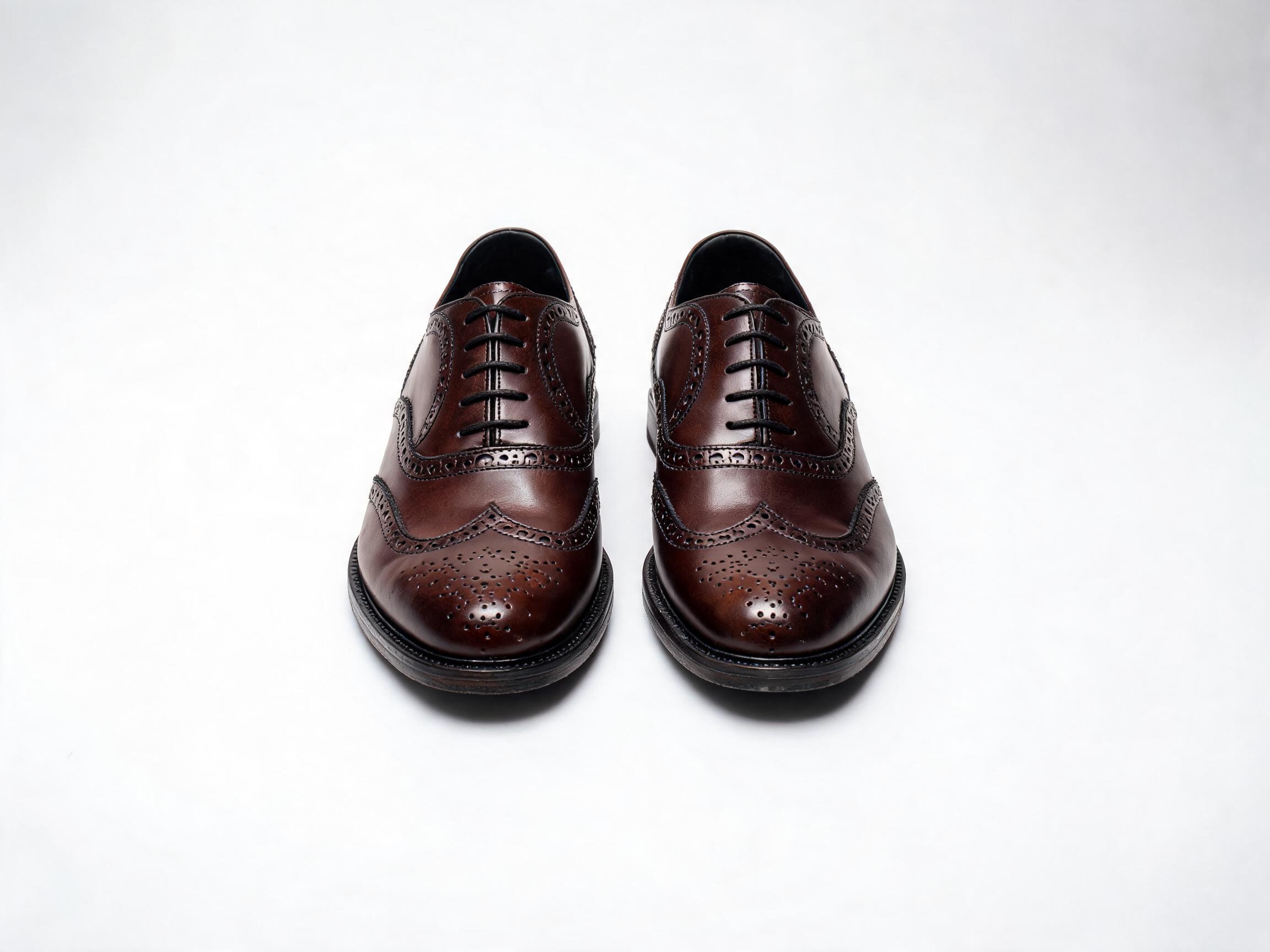
Then judge the sample on detail precision, because that is what your customer sees. A dark brown full brogue is a useful test case: wingtip perforation and stitching detail either align cleanly across both shoes or they do not, and the answer tells you more about line discipline than any brochure.
Ask for QC process documentation
Request the inspection structure, not a quality slogan. A documented three-stage process is a good baseline: incoming material checks (leather thickness, color, grain), in-line construction checks during stitching and lasting, and final inspection of finished shoes for symmetry, bonding strength, cleanliness and packing accuracy. Ask which checks are performed on random pairs, such as forefoot flex testing, color-fastness and sole-adhesion. Ask whether inspection reports are shared on request.
Confirm willingness to host third-party inspection
This is a single yes-or-no question with high diagnostic value. A factory that welcomes third-party inspection has usually built its process to survive one. Hesitation, conditions or a fee structure that appears only after you ask are all worth understanding before you place a bulk order.
| Evidence request | What it verifies | Weak answer looks like |
|---|---|---|
| Sample on your actual style | Construction capability, detail precision, realistic turnaround | Stock photos only; sample "available soon" |
| QC stage documentation | Whether inspection is a process or an intention | "We check every pair" with no stages named |
| Inspection reports on request | Record-keeping discipline | Reports never produced for past orders |
| Third-party inspection welcome | Confidence in bulk consistency | Refusal or unexplained conditions |
| Written custom details | Whether customization is real or sales language | Verbal promises, no confirmation sheet |
Per-category verification notes
Category fit is not a formality. Each footwear category concentrates risk in a different place, so the verification questions change.
Dress shoes
Check last shape consistency, welt or bonding construction, and whether cap-toe seams and brogue detailing are hand-worked or stamped. Ask how the factory controls color across dye lots, since a dress-shoe program lives or dies on matching pairs across shipments. A published men's size range such as EU 39-45 gives you a reference point for the grading the factory already runs.
Heels
Ask about heel attachment and stability testing, not just the upper. Sole adhesion and the heel-to-sole bond are the failure points that generate returns. Request the specific in-line checks performed after lasting.
Flats
Flats expose pattern accuracy and material yield. Ask how the factory handles upper-to-sole alignment on soft constructions, and request final inspection criteria for symmetry, since asymmetric flats are a common complaint.
Sandals
Strap attachment and hardware quality dominate. Ask which components are sourced and whether incoming material checks cover hardware as well as leather. Confirm the factory's process for testing strap pull strength.
Boots
Lace-up boot construction adds eyelet setting, lining and heavier sole bonding. Ask whether the same lines that run dress shoes also run boots, or whether boots come from a separate line, and confirm the flex and adhesion checks applied to the heavier build.
What a credible OEM/ODM partner confirms in writing
Verbal flexibility is cheap. Before you commit, get the customization scope on paper with enough specificity to compare factories against each other.
- Color matching: whether Pantone color matching is offered, and what happens if the matched lot falls outside tolerance.
- Construction and material changes: whether sole material changes are supported, and which changes require a new last or new tooling.
- Branding: whether insole branding, logo boxes and hangtags are part of the program, and whether packaging artwork is produced in-house or by a third party.
- Commercial terms: confirm the minimum order quantity and production lead time for your target styles with each shortlisted factory, along with the trade terms offered (for example EXW, FOB or CIF).
- After-sales: the warranty period covering manufacturing defects and the stated response time for claims.
For context on what these commitments look like when written down, an established export manufacturer may state a 6-month quality warranty covering manufacturing defects, an after-sales team response within 48 hours, and trade terms of EXW, FOB and CIF. Aurevia Footwear Co., Ltd., based in Quanzhou, China and established in 2011 with about 260 staff, publishes exactly these terms alongside its OEM/ODM and private-label support. Use such published terms as a comparison template, then get your own written confirmation per style.
A condensed shortlist-and-verify checklist
Shortlist
- Dedicated production lines exist for your category
- In-house design team converts sketches, reference photos or tech packs into production-ready samples
- Published product range matches your construction type
- Which steps, if any, are subcontracted is disclosed
Verify
- Sample ordered on your actual style, with turnaround confirmed in writing
- QC stages documented: incoming material, in-line, final inspection
- Random-pair tests named (flex, color-fastness, sole adhesion)
- Inspection reports available on request
- Third-party inspection welcomed
- Pantone matching, sole changes and branding options confirmed in writing
- Minimum order quantity and production lead time confirmed per style
- Warranty period and after-sales response time stated
FAQ
How many shoe manufacturing companies should I shortlist?
Three to five is usually enough to compare meaningfully without spreading your sampling budget too thin. Shortlist more only if your category is narrow and few factories run the right lines.
How long should sampling take?
It depends on whether the style already exists. Published benchmarks from an established manufacturer are 3-5 days for existing samples and about 7-12 days for customized samples after details are confirmed. Ask each factory for its own figure on your specific style and hold it to that.
Is a factory that subcontracts part of production still viable?
Often yes, provided you know which steps are subcontracted and who inspects the finished shoe. The risk is not subcontracting itself but losing visibility over where defects originate.
What is the single strongest verification signal?
Willingness to host third-party inspection, combined with a documented multi-stage QC process. Both are hard to fake over the length of a bulk order, which is precisely why they are worth asking for.
A note on numbers: confirm the minimum order quantity and production lead time for your target styles with each shortlisted factory. Terms vary by construction, material and branding scope, and a written confirmation per style is the only figure worth planning a launch date around.