
A sourcing guide for buyers building bridal footwear ranges: how duchess satin behaves as an in-catalogue material, why dye-lot consistency decides whether a wedding-day colour matches, and how custom colour development works on a proven satin programme — with the real white, ivory and pink colourways and the flat that actually sits in the catalogue.
Bridal footwear sourcing
One fact up front, before anything else: Aurevia's current catalogue lists no satin flat SKU. The satin programme is proven on the White Satin Wedding Heels line, and a satin flat is a development request, not a shelf item. What follows still applies in full if you are searching for satin bridal flats: the satin grade, colour-matching and custom-dye decisions below are exactly what you will need for that development conversation, and they also govern the satin heel line you can order today.
Key takeaways
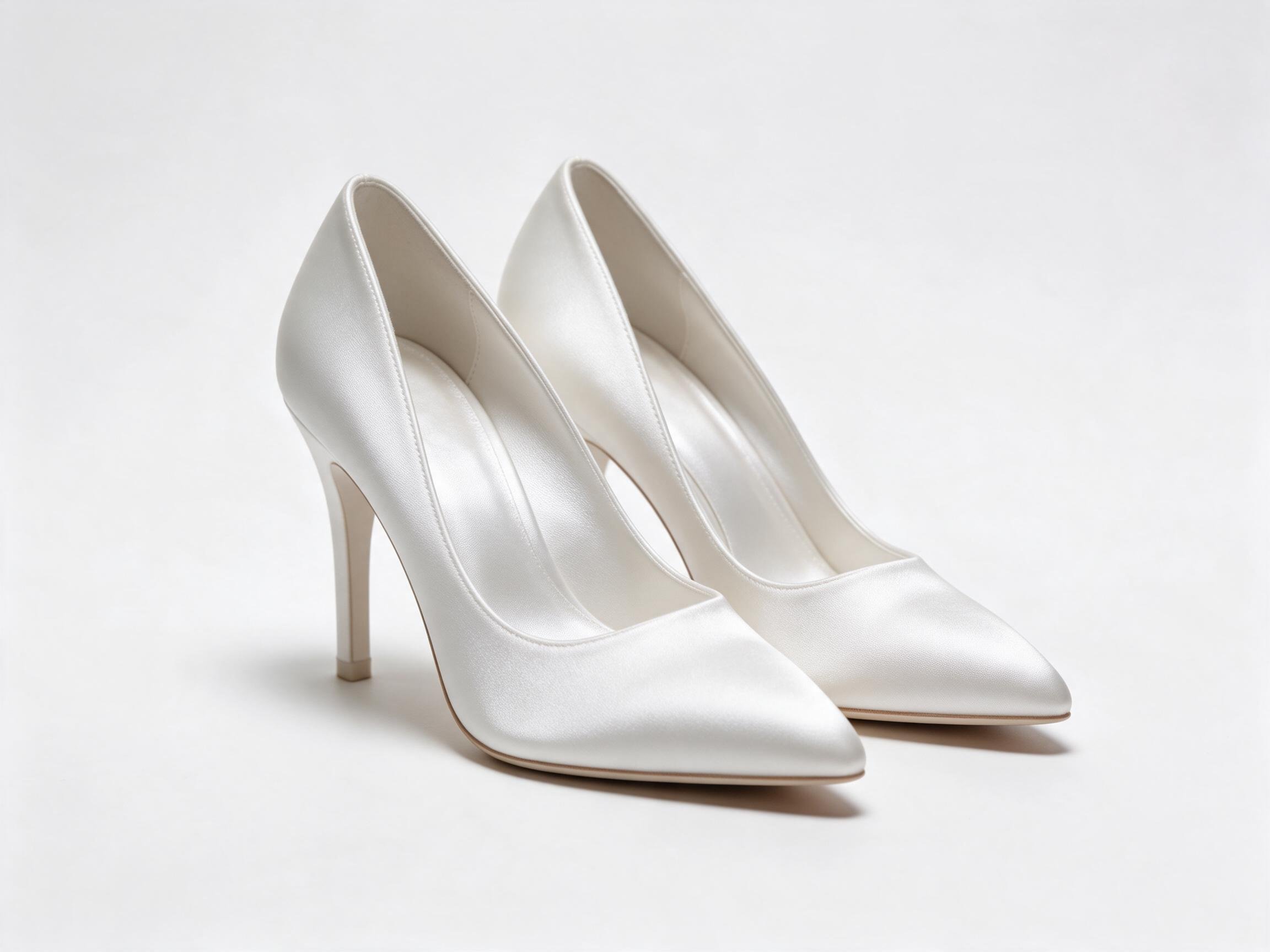
- Duchess satin is the in-catalogue satin material on Aurevia's wedding heel line — a heavier satin chosen for structure and a controlled sheen rather than a soft drape.
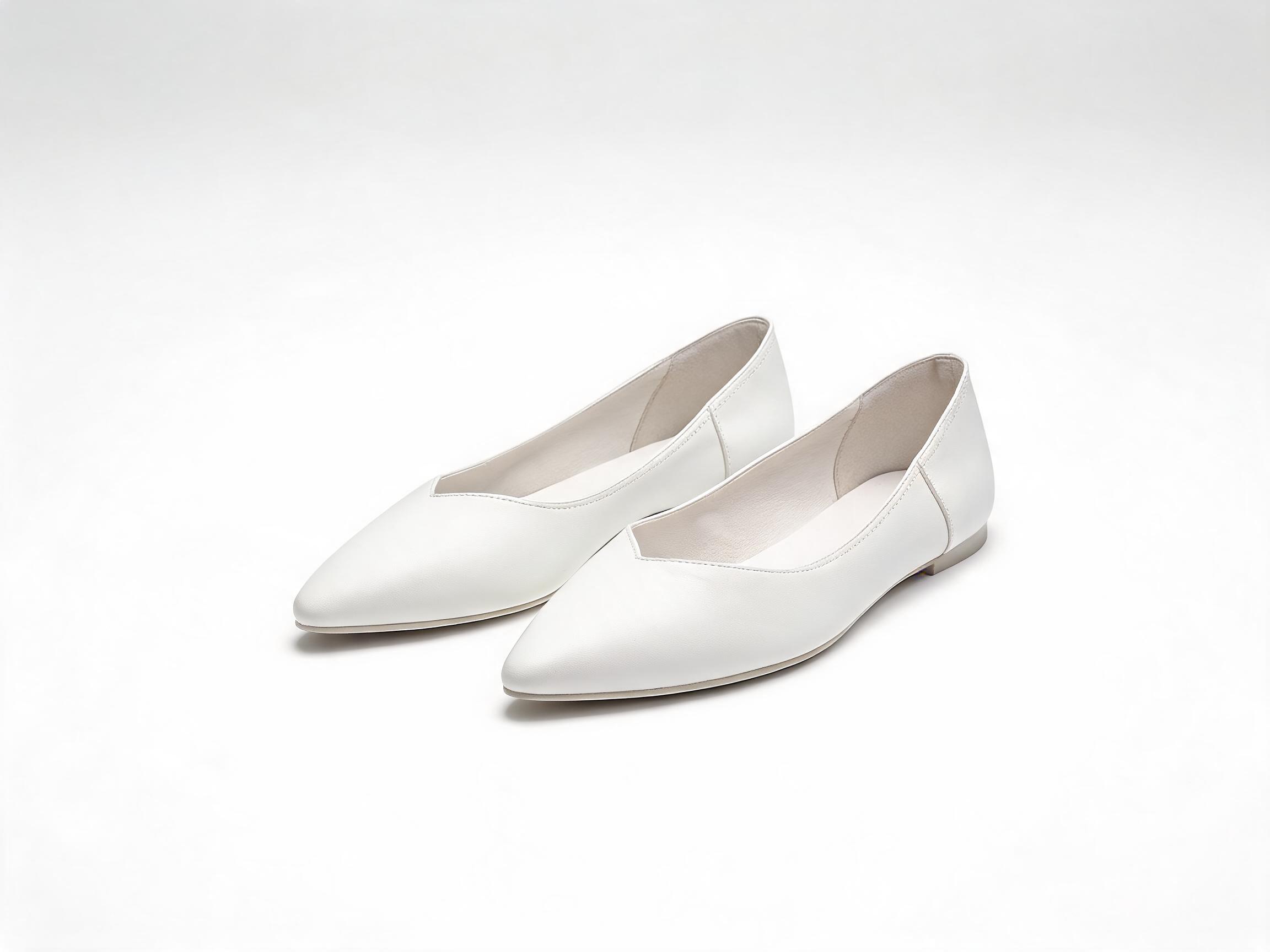
- The flat in the catalogue is nappa leather, not satin. The satin programme is proven on the White Satin Wedding Heels line; there is no satin flat SKU listed.
- Dye-lot consistency is a sourcing requirement, not a finishing detail. Specify it in the purchase order and agree how it will be checked.
- Custom colour development starts from a submitted reference — a swatch, a fabric cutting or a Pantone reference — and is confirmed under lighting before bulk.
- Listed colourways on the satin heel line: white, ivory, pink and custom colours. Sizes EU 34–41, MOQ 100 pairs, lead time 25–35 days — confirm current MOQ and lead time with the sales team before ordering.
In this article
1. Which satin grade belongs in a bridal catalogue
“Satin” describes a weave, not a fabric. The same word covers lightweight polyester linings, stretch satins with elastane, and heavy silk or polyester duchess satin used for structured gowns and shoes. A buyer who writes “satin upper” on a brief leaves the factory free to choose any of them, and the sample that comes back may bear no resemblance to the bridal product the range needs.
The satin that appears in bridal footwear catalogues — including Aurevia's White Satin Wedding Heels — is duchess satin. Its value in a shoe is structural: it is a denser satin, so it holds a clean edge on a pointed toe and around the topline instead of collapsing into soft folds, and its sheen is more directional and controlled than that of a light satin. That matters for a photograph and for a ceremony where the shoe is seen from a distance and in close-up.
For sourcing purposes, the grade question reduces to a short set of specifications you should put in writing:
- Weave weight class. Duchess-style heavy satin versus lighter satin. State it, do not assume it.
- Fibre content. Silk and polyester duchess behave differently in dyeing, cleaning and creasing. The reference colour should be achievable on the substrate you specify. The fibre content of the listed satin heel is not stated in the catalogue field quoted here — confirm it with the sales team as part of your brief.
- Backing or lining. A structured satin upper on a shoe normally needs a lining; bridal linings are usually specified in a soft skin or in a breathable textile. The lining colour is visible at the topline and matters for the match.
- Surface finish. Matte-modified satins and high-lustre satins read differently under flash photography and under warm reception lighting.
Ask for a fabric swatch of the exact satin plus its construction details before approving a development. A photograph of a shoe does not tell you what grade is under it.
2. Colour matching: why dye lots decide the wedding day
Bridal colour is judged against other bridal colour, not in isolation. A pair of satin flats or heels is judged against a gown, a veil, a sash and the bridesmaids' dresses — often assembled by different suppliers from different fabric lots. The common failure is not a wrong colour; it is a colour that is right in isolation and slightly off next to the gown, or right on the first production run and slightly off on the reorder.
Dye lots are the mechanism. Every batch of dyed satin is mixed separately, and even with the same recipe the output shifts slightly. The shift is normally small, but on white, ivory and pale pink it is exactly the range where the eye is most sensitive. Three controls address it:
Anchor the reference, not the name
“Ivory” is not a colour; it is a family. Define it against a physical reference — a retained master swatch, a Pantone or similar standard reference, or the customer's own fabric cutting. The reference should be retained by both parties so a reorder has something to match against.
Agree the tolerance before the first bulk run
State in the purchase order how close each delivery must be to the approved reference, and how that will be checked — normally a visual comparison of production swatches against the master under specified lighting, with the buyer approving the production swatch before bulk cutting. This does not remove variation; it makes it visible before it becomes inventory.
Specify lot handling for reorders
For a bridal programme, ask the supplier to record the dye lot on each shipment and to keep the master reference on file. When a boutique reorders six months later for a bride whose dress has already been bought, a reorder matched against a retained master is a manageable task; one matched against a memory is not.
3. Custom dye development: from reference to bulk
Custom colour is the normal request in bridal ranges, because a collection's colour story rarely stops at white, ivory and pink. The workable sequence is short and should be agreed up front:
- Reference intake. The buyer submits a physical reference — a swatch, a fabric cutting from the gown supplier, or a standard colour reference. A screen image alone is not sufficient for a dye match.
- Lab dip. The supplier dyes a small sample on the specified satin substrate and returns it for evaluation.
- Evaluation under agreed lighting. Compare the dip to the reference in daylight, in warm indoor light and under flash. Pale bridal colours often separate most clearly under warm light.
- Approval and production swatch. After the dip is approved, the first production run is checked against it before cutting.
- Retention. The approved dip and production swatch are retained as the reorder reference.
Two practical points shorten this cycle. First, send the reference early — dye development sits in front of sampling, and a late reference pushes the whole schedule. Second, specify the substrate with the reference, because a colour developed on one satin grade does not carry unchanged to another.
The satin heel line already runs white, ivory, pink and custom colours, which means the dye-development route is established on that product rather than being set up from scratch for each new colour story. That is the practical advantage of building a satin flat programme on a proven satin line: the material, colour and custom-dye process are already in place.
4. What is actually in the flat catalogue
Buyers searching for satin bridal flats often arrive expecting a satin flat SKU to be listed. In Aurevia's current catalogue the flat is a leather product, and the satin programme is on the heel line. Stating that plainly saves a sampling cycle:
| Product | Upper material | Form | Sizes | Colourways |
|---|---|---|---|---|
| White Pointed-Toe Flats | Soft nappa leather | Pointed toe, flat heel | EU 35–41 | As listed on the product page |
| White Satin Wedding Heels | Duchess satin upper | Pointed toe, approx. 8 cm stiletto heel | EU 34–41 | White, ivory, pink, custom colours |
Both products are listed at MOQ 100 pairs with a lead time of 25–35 days; confirm current MOQ and lead time with the sales team before ordering. Aurevia Footwear Co., Ltd. is a genuine-leather footwear and fashion accessories OEM/ODM exporter founded in 2011, with about 260 staff, supplying buyers in Europe, North America and the Middle East.
For a bridal collection, the two lines serve different roles. The nappa flat is the soft, low-heel option — useful for the bride who changes shoes for the reception, and for the mother-of-the-bride and bridesmaid segments where a leather flat is the more durable choice. The satin heel carries the colour story. If the range needs a satin flat, that is a development request against the proven satin line, not a catalogue item to order off the shelf — and it should be discussed with the supplier as such, including which satin grade will be used on a flat construction.
The wider flat range is listed at women's flats.
5. Writing a satin brief the factory can price
A brief that produces a usable quotation covers six things:
- Construction. Flat, low block heel or heel — and the last shape, since a pointed toe is standard on both listed products.
- Satin specification. Duchess-grade satin or equivalent, with fibre content and lining specified.
- Colour and reference. Named colourway or custom, plus the physical reference for custom work.
- Size range. Bridal ranges often need a wider run than fashion; the listed ranges are EU 34–41 on the heel and EU 35–41 on the flat.
- Quantity per colour. MOQ is normally quoted per style-colour, so the colour count drives the order value more than the total pairs do.
- Dye-lot and swatch requirements. Reference retention, production swatch approval and lot recording on shipments.
Where the brief leaves a gap — a satin flat construction that has not yet been developed, or a colour outside the listed colourways — the answer is a development conversation with samples attached, not an assumption that the catalogue covers it.
FAQ
Are satin bridal flats available in the catalogue?
Not as a listed SKU. The listed flat is the White Pointed-Toe Flats in soft nappa leather. The satin programme runs on the White Satin Wedding Heels. A satin flat would be a development request, and the satin grade would need to be confirmed for a flat construction.
Which satin is used on the wedding heels?
Duchess satin upper. It is a heavier satin than light dress satin, which is why it holds structure on a pointed toe. Its fibre content is not stated in the catalogue field quoted here — confirm it with the sales team.
Can we get a custom colour?
Custom colours are listed on the satin heel line. Development starts from a physical reference — a swatch, a gown fabric cutting or a standard colour reference — and is approved at lab-dip and production-swatch stage. Send the reference early, because dye work sits ahead of sampling.
How do you keep colours consistent across reorders?
Through a retained master reference, an agreed comparison tolerance written into the purchase order, and dye-lot recording on shipments. The buyer should approve the production swatch before bulk cutting.
What are the order terms?
Listed at MOQ 100 pairs and 25–35 days lead time. Confirm current MOQ and lead time with the sales team before ordering, since both are quoted per order.
Next step. If you are building a bridal range, send the satin grade you want, the colour reference you need to match, and the constructions you are considering. The satin heel line is the proven starting point for the colour programme; the nappa flat is the low-heel option currently in the catalogue.
Confirm current MOQ and lead time with the sales team before ordering.
Specifications in this article are as listed for the named products. Dye development and satin grade for a flat construction are confirmed per project.