
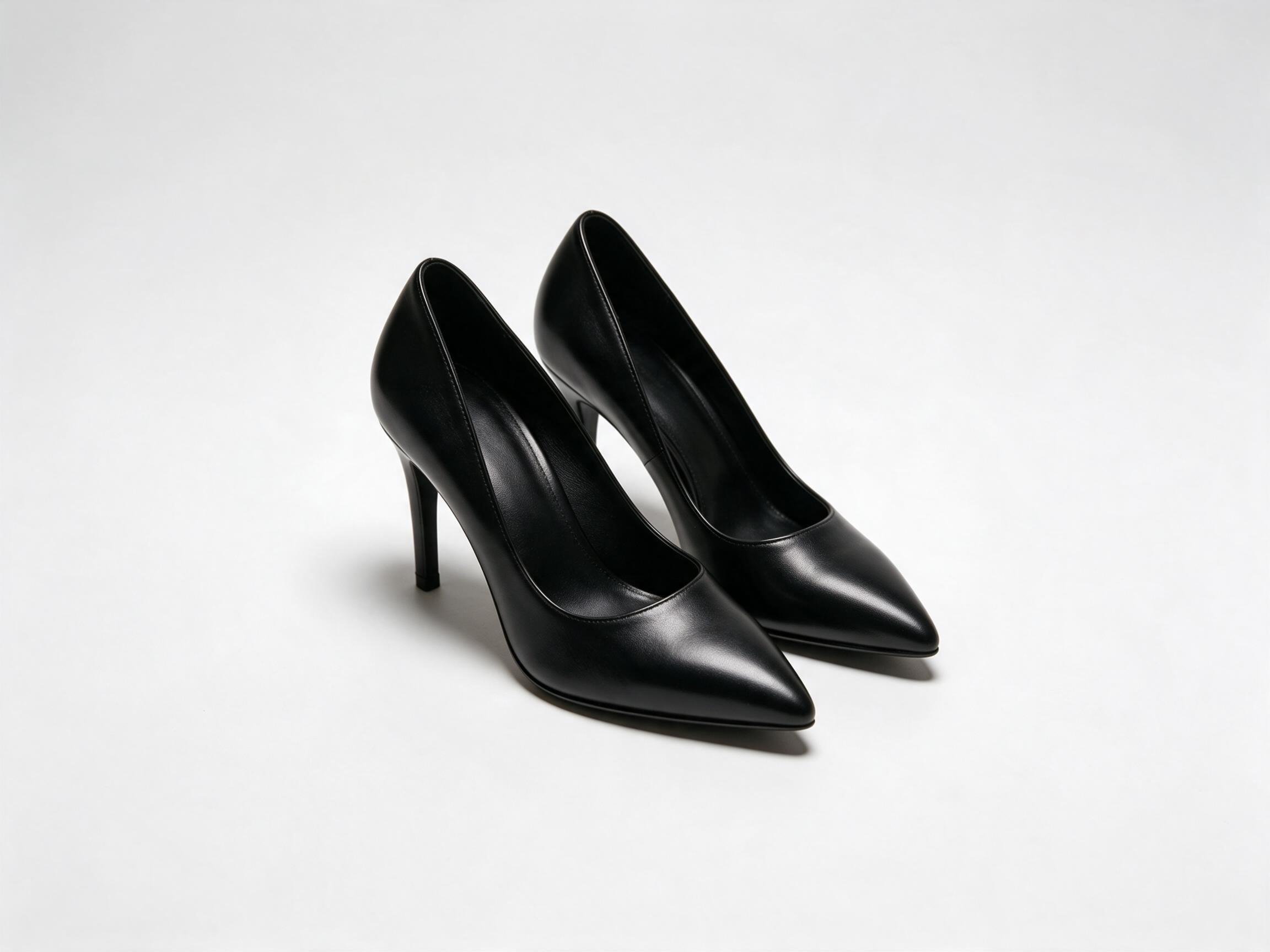
A buyer's evaluation framework for wholesale luxury shoes: how to judge leather sourcing and finishing, handwork details, brand-level QC and packaging at the sampling stage — with pass/fail criteria you can verify before placing bulk orders.
Generic supplier checklists — business licence, factory audit, sample turnaround — answer whether a factory exists and can ship. They do not tell you whether it can hold a high-end standard across hundreds of pairs. This article sets out the acceptance benchmarks that separate premium wholesale luxury shoes from mid-market product, and how to verify each one at the sampling stage, before money is committed to a production run.
- Evaluate premium suppliers on four verifiable layers: leather sourcing and finishing, handwork details, in-line and final QC, and brand-level packaging.
- Every criterion here can be checked on a physical sample — you do not need to trust a brochure.
- The sample is your acceptance benchmark. What you approve at sampling is what you should measure bulk production against.
- Ask for the QC method, not just the QC claim: which tests, on which parts, at which stage.
Layer 1: Leather sourcing and finishing
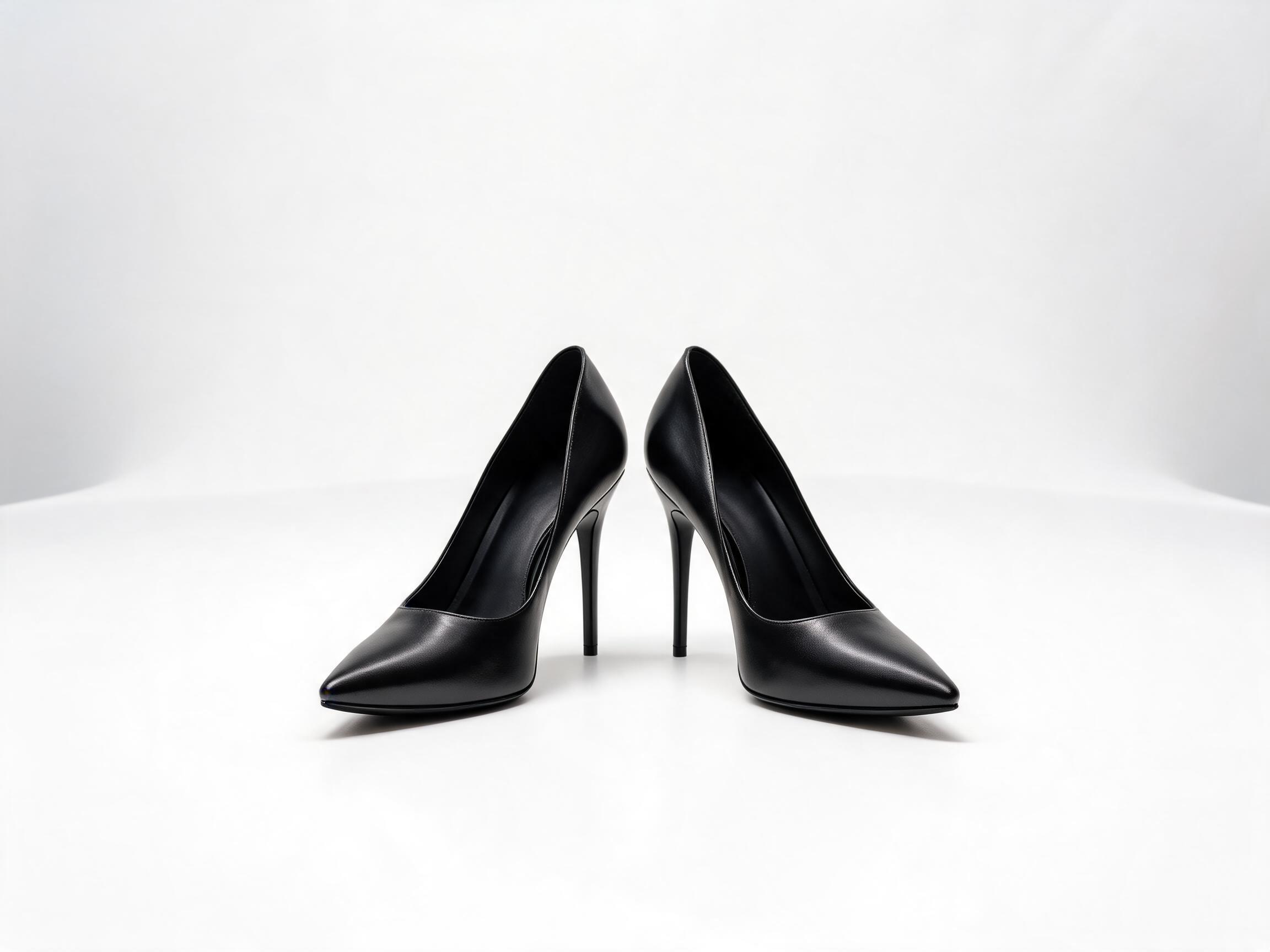
At the premium tier, leather is the largest single driver of perceived quality and the easiest place for a factory to quietly trade down. The evaluation question is not “is it leather” but “which leather, finished how, and can the supplier state it precisely”.
Ask the supplier to name the material on the specification sheet before you see the sample — for example, polished lambskin or full-grain calf — along with tannery origin if they can disclose it. A supplier that can specify material at the quoting stage has usually built the sample around a known input; one that answers vaguely will often be sourcing ad hoc.
What to check on the sample itself
- Surface consistency across pairs. Order two or three pairs of the same style and colour and lay them side by side. Tonal drift, uneven grain or visible scars between pairs signal inconsistent hide selection or splitting from different lots.
- Finishing at the edges and cut lines. Roll the edge between thumb and forefinger. Raw, fuzzy or paint-flaking edges on a polished upper are a finishing shortcut. Burnishing or painted edges should be even in width and colour.
- Colourfastness. Rub a white cloth firmly across the inside of the upper. Transfer is an early warning that the finish will mark socks or light-coloured linings in wear or in humid storage.
- Flex behaviour. Bend the forefoot of the shoe by hand where the foot actually breaks. Look for surface cracking at the crease line — polished finishes are the most sensitive to poor substrate preparation.
How a supplier should test this before you do
A supplier with a real premium process tests leather on the way in, not just the finished shoe. Ask whether incoming material inspection covers the upper leather — colour, thickness and surface defects. If the answer is only “we check the finished shoes”, you are relying on the cutting room to catch defects that are cheaper to reject at the hide.
Layer 2: Handwork and construction details
“Handmade” is the least useful word in a factory conversation because it has no agreed meaning. Replace it with component-level questions: which operations are done by hand, and what does good look like on those operations?
| Component | What to inspect | What a defect looks like |
|---|---|---|
| Stitching | Stitch length, tension and line straightness on the upper and heel counter | Skipped stitches, uneven spacing, loose thread tails, wandering seam line |
| Heel attachment | Symmetry and alignment of the heel to the sole; the 10 cm stiletto in a premium style should sit vertical from side and rear views | Leaning heel, visible gap at the heel seat, glue squeeze-out |
| Sole bond | Seam between upper and sole, checked around the full circumference | Gaps, lifting at the toe or heel, uneven cement line |
| Lining and insole | Lining turned and secured without wrinkles; insole flat and clean | Bunched lining, exposed adhesive, rough insole edges |
| Symmetry | Pair the left and right shoe and compare from heel, side and toe | Different heel heights in one pair, mismatched toe shape, heel counter height difference |
For a heeled style, symmetry and heel stability carry disproportionate weight: the buyer notices a leaning heel from a metre away and will attribute it to the brand, not the factory. Put the sample on a flat surface and check that it stands without rocking, and that both shoes of the pair contact the ground identically.
Layer 3: Brand-level QC, verified at sampling
A QC claim is only as good as its method. When you ask a supplier how they control quality, listen for stage-specific testing, then ask to see how each applicable test would apply to your sample.
A three-stage QC model worth asking about
- Incoming material inspection — leather, lining, soles and hardware checked on receipt, before cutting.
- In-line inspection — checks during assembly, so defects are caught at the operation that causes them rather than at the end of the line.
- Final inspection — the finished pair checked against the approved sample, including forefoot flex testing, colourfastness and sole bond testing.
That final inspection list matters because it maps to the failure modes premium buyers actually see: creasing and finish cracking under flex, transfer of dye to linings or socks, and sole separation. Ask the supplier to describe how each test is performed on a heeled shoe, and at what AQL or sampling rate the final inspection runs.
Setting the sample as the acceptance standard
Before you approve a sample, write down what you approved. Record leather grade and colour reference, heel height and shape, stitch specification, hardware finish and the measurements you checked. Bulk production should be measured against that record, not against a verbal memory. This is the step most often skipped and the source of most disputes: the factory is producing to what it understood, not to what you assumed.
Layer 4: Packaging and presentation standards
For premium wholesale luxury shoes, packaging is part of the product. A buyer opening a carton expects the pair to arrive in the condition the sample promised. At sampling, ask for the finished pack — box, dust bag, tissue and any labelling — not just the shoe.
- Box construction and print. Check board rigidity, print registration and colour accuracy against your artwork.
- Internal protection. Tissue wrapping, heel and toe shaping, and separation between shoes to prevent scuffing in transit.
- Labelling. Placement, print quality and consistency of any brand or care labels you have specified.
- Carton configuration. Ask how pairs are packed per carton and how the carton is sealed and marked, so the bulk shipment matches the sample pack.
A packaging sample adds days to the process but is one of the cheapest ways to detect a supplier that treats packaging as an afterthought.
A sampling scorecard you can take to the factory
The table below turns the four layers into a pass/fail sheet. Fill it in on the physical sample and keep it with the approved reference pair.
| Layer | Benchmark | Verification at sampling |
|---|---|---|
| Leather | Material specified on the sheet; finish even across pairs | Compare 2–3 pairs side by side; cloth rub test; flex the forefoot |
| Handwork | Consistent stitch length and tension; symmetric pair | Inspect seams and heel alignment; stand the pair on a flat surface |
| Sole bond | No lifting around the circumference | Press the seam line; ask how sole bond testing is done |
| Colourfastness | No transfer to lining or socks | White cloth rub; ask which test the factory runs at final inspection |
| Packaging | Match to approved artwork and protection spec | Request a finished pack sample with the shoe sample |
Commercial terms at the premium tier
Specification quality and commercial terms should be read together. A supplier that can state leather grade, heel height and size range precisely is also more likely to give you a clear MOQ and lead time, because its costing is built on known inputs.
To use a concrete example from our own catalogue, the Black Leather Stiletto Heels are built on a polished lambskin upper with an approximately 10 cm heel, in sizes EU 34–41. The listed MOQ is 100 pairs per colour, with a lead time of 25–35 days. Confirm current MOQ and lead time with the sales team before ordering.
Sample timelines are the first real test of a supplier's responsiveness. For reference, standard samples ship in 3–5 days and customised samples in 7–12 days. A supplier that quotes a long sample lead time before any customisation has been discussed is telling you something about its production load.
Match the supplier's model to your programme
Both OEM and ODM work are relevant to premium buyers, depending on whether you are bringing your own design or adapting an existing shape. Ask which model applies to your project, and whether your design can be sampled without changing the leather specification you approved.
After-sales terms are part of the evaluation
Ask what warranty the supplier offers and how after-sales issues are handled. As a benchmark, our own terms are a 6-month warranty and a 48-hour after-sales response. Verify that the warranty covers the failure modes you care about — sole bond, finish cracking, heel attachment — and that the response commitment is written into the order documents.
What to settle before you place a bulk order
The sampling stage is where a premium supplier should prove itself: a leather specification you can name, handwork you can inspect, a QC process with tests attached to stages, and a packaging standard you have held in your hands. Score the sample against the benchmarks above, record what you approved, and only then move to bulk. The factory that can answer all four layers clearly is the one worth the order; the factory that answers in adjectives is worth another sample round.