Distributors and retail chains sourcing men's leather shoes in bulk face a common challenge: building a coherent range that covers dress, casual, and boot categories without multiplying supplier relationships. This article explains how to structure a construction-tiered men's range inside a single OEM factory program, covering tier definitions, leather grade selection, and batch QC organization.
Wholesale men's shoes buyers — distributors, retail chains, and private-label brands — often approach an OEM factory with a list of styles rather than a structured range. The result is a collection that looks assembled rather than designed: overlapping silhouettes, inconsistent leather quality across price points, and QC that treats every style the same way. A construction-tiered approach solves this by organizing the range around how each shoe is built, not just how it looks. This article explains how to plan that structure inside a single factory program, using construction tiers, leather grade selection, and batch-level quality control as the organizing principles.
Key Takeaways
- Split the men's range into three construction tiers — dress, casual leather, and boots — each with its own last, sole, and leather specification.
- Match leather grade to tier: full-grain and top-grain for dress and premium casual, corrected-grain or split for entry price points.
- Organize QC by batch and construction type, not by style alone, so defects are caught at the stage where they originate.
- Sampling with an OEM factory typically takes 7–12 days; bulk production commonly falls in the 30–45 day window depending on order content.
- Minimum order quantities are confirmed per color and style with the supplier — plan tier splits around that reality.
Why Construction Tiers, Not Just Style Categories
Most wholesale men's shoe ranges are organized by style category: oxfords, derbies, loafers, boots. That works for merchandising but not for production planning. Two shoes in the same style category can be built on completely different constructions — a cemented penny loafer and a Blake-stitched derby share a silhouette family but not a production line, a last, or a QC protocol.
Construction tiers group shoes by how they are made. That matters for three reasons. First, it aligns sampling: styles within a tier can share lasts and sole tooling, reducing development time. Second, it aligns leather selection: construction dictates how much the upper is stressed during lasting and sole attachment, which affects the leather grade you can use. Third, it aligns QC: the failure modes of a cemented dress shoe differ from those of a boot, so the inspection checkpoints should differ too.
For a distributor building a range with one OEM factory, tiering also simplifies communication. Instead of specifying each style independently, you specify a tier framework and let the factory propose styles within it.
Tier 1: Dress Shoes — The Formal Anchor
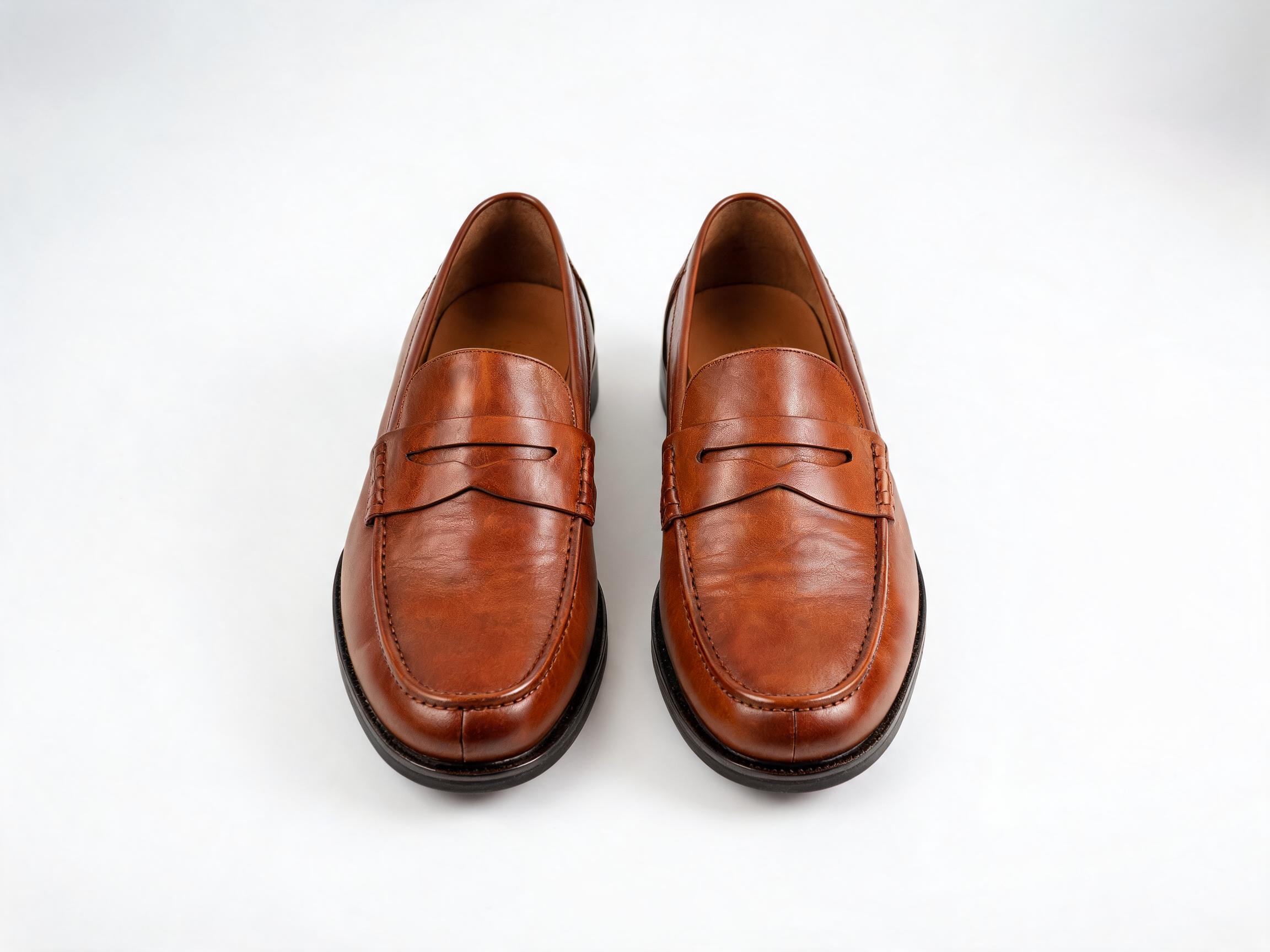
Dress shoes anchor the top of the range and carry the highest leather expectations. This tier typically includes closed-lacing oxfords, open-lacing derbies, and formal loafers. Construction is usually cemented or Blake-stitched, with a lean last and a leather or leather-covered sole.
Leather grade: full-grain or premium top-grain. The upper is lasted under tension and the toe is often reinforced, so the hide needs consistent thickness and minimal stretch variation. Ask the factory which tannery grade they propose for the tier and request a cutting yield estimate per size run — yield differences between grades affect your landed cost more than the per-square-foot price.
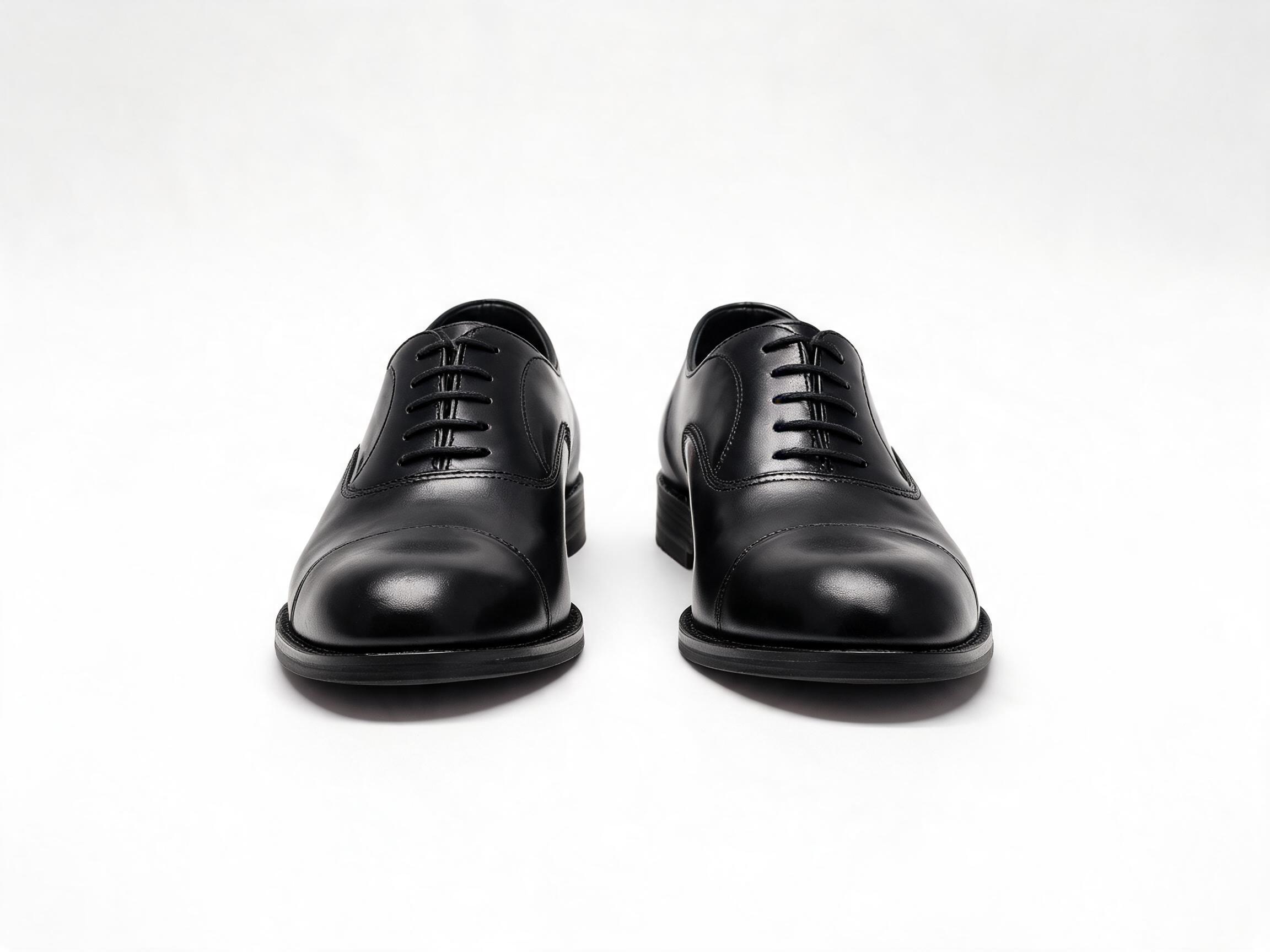
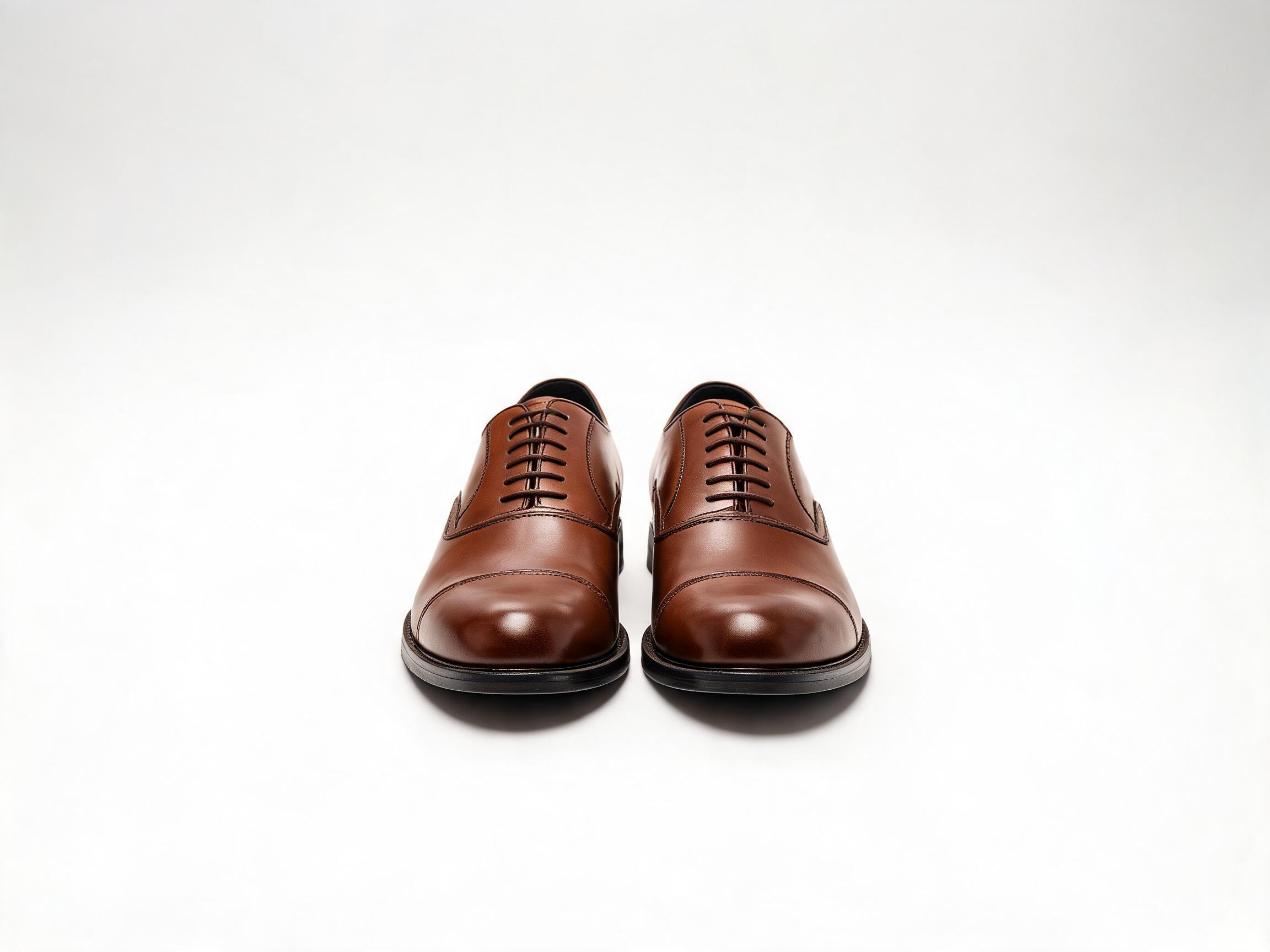
Product reference: a black cap-toe oxford with closed lacing, available in EU sizes 39–45 and custom colors black, white, and brown, is a representative Tier 1 style. A brown derby dress shoe with open lacing covers the slightly less formal end of the same tier.
QC focus: toe shape symmetry, sole bonding at the forepart, and stitching consistency on the cap seam. The forepart flexing test is particularly relevant here — a dress shoe that creases poorly at the vamp will fail at retail regardless of how it looks on the shelf.
Tier 2: Casual Leather Shoes — The Volume Driver
Casual leather shoes — loafers, brogues, slip-ons, and soft-constructed derbies — typically drive unit volume in a wholesale men's range. They sit between dress and boots in both price and construction complexity. Cemented construction is common because it supports a wide range of sole options and allows more decorative detailing.
Leather grade: top-grain is the workhorse here, with full-grain reserved for premium colorways. Brogue detailing and perforation patterns stress the leather differently than a plain vamp, so confirm with the factory that the grade selected holds its shape through punching and edge finishing.
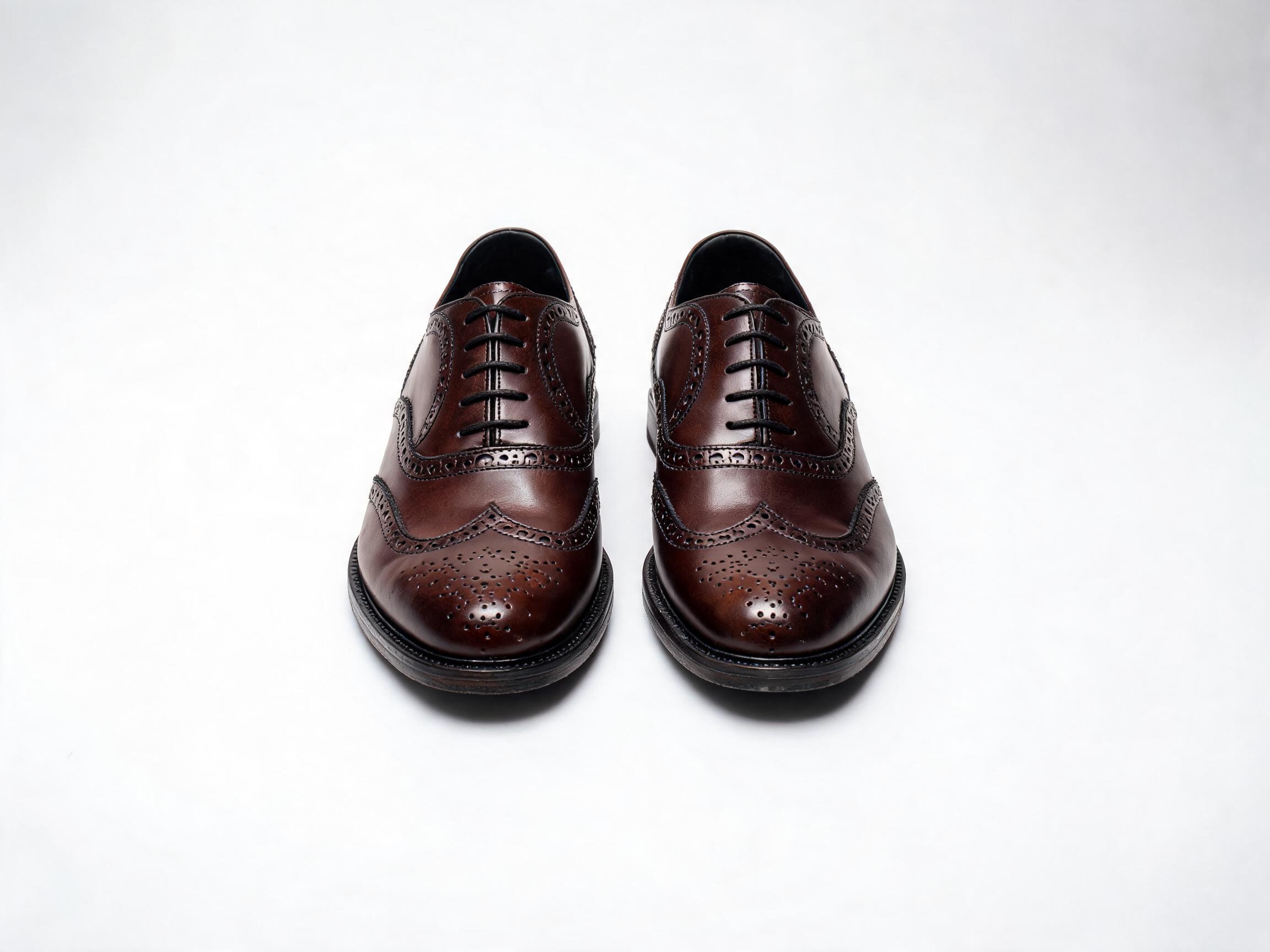
Product reference: a cognac penny loafer with cemented construction fits the core of this tier. A dark brown full brogue with wingtip detailing serves buyers who want a decorative casual option without moving into Tier 1 pricing.
QC focus: brogue punching alignment, edge finishing consistency, and sole bond strength. Because casual styles often use lighter soles and more flexible constructions, the sole-bonding test should be run on every batch rather than sampled occasionally.
Tier 3: Boots — The Seasonal and Margin Tier
Boots — chelsea, chukka, derby boot, and lace-up styles — extend the range into fall/winter and often carry higher margins. Construction varies more widely than in the other tiers: cemented boots are common, but some buyers specify stitched constructions for durability positioning.
Leather grade: full-grain or heavy top-grain for the upper, with attention to the shaft and collar areas where the leather is folded and stitched. Boots use more leather per pair, so grade consistency across the batch matters more for cost control than for any other tier.
QC focus: shaft symmetry, collar stitching, and outsole attachment at the heel. Boots are also where insole branding and private-label packaging most often appear, so confirm those details at sampling rather than at bulk stage.
Structuring the Tier Split: A Practical Framework
The right split depends on your channel. A retail chain with a broad middle-market footprint might weight the range 30% dress, 50% casual, 20% boots. A distributor serving independent menswear stores might shift toward casual and dress. The table below shows how the tiers differ on the dimensions that matter for planning.
| Tier | Typical Construction | Leather Grade | QC Emphasis | Range Role |
|---|---|---|---|---|
| Dress | Cemented or Blake-stitched | Full-grain or premium top-grain | Forepart flexing, toe symmetry, sole bonding | Formal anchor, brand positioning |
| Casual leather | Cemented | Top-grain (full-grain for premium) | Brogue alignment, edge finishing, sole bond | Volume driver, color variety |
| Boots | Cemented or stitched | Full-grain or heavy top-grain | Shaft symmetry, collar stitching, heel attachment | Seasonal extension, margin |
Two planning rules apply across tiers. First, keep last shapes consistent within a tier so that sizing runs (for example, EU 39–45) can be produced without re-tooling. Second, plan colorways per tier rather than per style — a factory running Pantone color matching can align leather and outsole colors across a tier more efficiently than across scattered styles.
Leather Grades: What to Check Before Committing
Leather grade terminology varies by tannery and region, so the label on a spec sheet is less important than what you verify at sampling. Three checks matter most:
- Thickness consistency within the hide. Variation between the butt and belly areas affects lasting and creasing. Ask the factory how they manage cutting yield across the hide.
- Color consistency across dye lots. If your range includes multiple styles in the same brown or black, confirm how the factory handles lot matching. This is where Pantone color matching at the factory level becomes useful.
- Finish durability at stress points. Brogue punching, cap seams, and boot collars are where finish wear shows first. Request samples in the exact grade and colorway you plan to order, not a generic swatch.
Aurevia offers OEM/ODM services including Pantone color matching, outsole material changes, insole branding, and private-label boxes and hangtags. These options let you differentiate tiers without changing factory, which keeps communication and QC consistent.
Batch QC: Organizing Inspection by Tier and Batch
Quality control in a multi-tier range should be organized at three stages, with tier-specific checkpoints at each.
Incoming material inspection. Leather, soles, linings, and hardware are checked on arrival. For a tiered range, this is where you catch grade mismatches before cutting — a top-grain lot delivered against a full-grain spec, for example.
In-line inspection. Checkpoints during lasting, sole attachment, and finishing. This is where construction-specific issues surface: forepart flexing on dress shoes, brogue alignment on casual styles, shaft symmetry on boots.
Finished-goods inspection. Final check before packing, including sole-bonding tests and cosmetic review. Third-party inspections are welcome, which lets you add an independent layer if your channel requires it.
The key discipline is batch traceability: each production batch should be tied to a tier, a leather lot, and an inspection record. That way, if a defect pattern appears at retail, you can trace it to a specific batch rather than the whole range.
Sampling and Production Timeline
Sampling with an OEM factory typically takes roughly 7–12 days, depending on style complexity and material availability. Bulk production commonly falls in the 30–45 day window depending on order content. For a tiered range, plan sampling in waves: Tier 1 and Tier 2 styles first, since they share construction logic, then boots. This lets you lock leather grades and QC checkpoints for the core range before the seasonal tier goes into development.
Trade terms are EXW, FOB, or CIF. Minimum order quantities are confirmed per color and style with the supplier — plan your tier split around that, not around an assumed MOQ.
FAQ
Can one factory produce all three tiers?
Yes, and that is the point of a tiered program. Aurevia, founded in 2011 and based in Quanzhou, China, with about 260 staff, serves Europe, North America, and the Middle East with OEM/ODM footwear and accessories. A single-factory program keeps lasts, leather sourcing, and QC under one roof.
How do I decide the tier split for my market?
Start from your channel mix and price architecture. Dress-heavy channels need a stronger Tier 1; volume-driven retail needs Tier 2 depth; seasonal markets need Tier 3. Confirm the split with your buying team before sampling, because it affects last and sole tooling.
What leather grade should I specify for each tier?
Full-grain or premium top-grain for dress, top-grain for casual, and full-grain or heavy top-grain for boots is a common structure. Confirm the specific grade and tannery with your supplier, and verify it at sampling.
Can I customize outsole materials, insole branding, and packaging across tiers?
Yes — Aurevia offers OEM/ODM including outsole material changes, insole branding, private-label boxes and hangtags, and Pantone color matching. Specify these at sampling so they are locked before bulk production.
How is QC handled across a multi-tier order?
QC runs in three stages — incoming material inspection, in-line inspection, and finished-goods inspection — with forepart flexing and sole-bonding tests included. Third-party inspections are welcome.
Next Step
If you are planning a men's range for wholesale distribution and want to structure it by construction tier inside one OEM program, the next step is a tier framework discussion: which tiers you need, what leather grades you expect, and how QC should be organized for your channel. Share your range plan and target markets, and the factory can propose a sampling sequence and confirm MOQs per color and style.