
A practical pre-order checklist for importers and brand buyers: what to lock in the specification, how to plan an inspection, and which quality control points to confirm with the factory before placing a work boots wholesale order.
Sourcing checklist for buyers
Placing a work boots wholesale order is mostly a problem of locking down details before production starts. This checklist covers what belongs in the written specification, how to schedule inspection, and which test records to ask for, using the Brown Leather Work Boots (product reference for this article) as the working example.
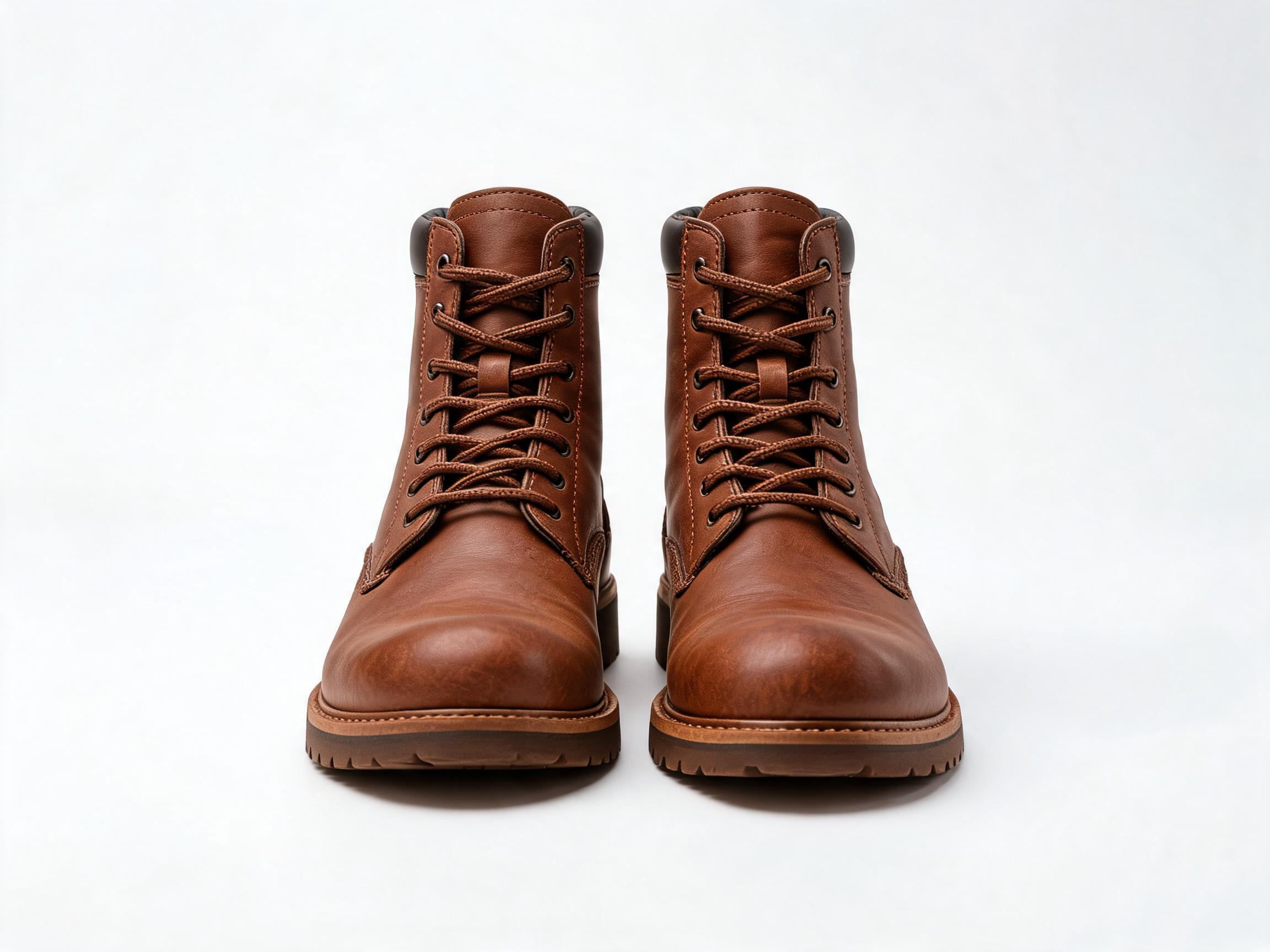
- Write the buy on a fixed specification: leather, lining, insole, outsole, toe construction, assembly method, lacing, shaft height, weight, carton quantity and packaging.
- Ask the supplier to describe its three-stage inspection process and confirm that third-party inspection is accepted.
- Request the specific spot-check records that matter for boots: forefoot flexing, colorfastness and outsole bond strength.
- Resolve MOQ and lead time with the sales team in writing before you commit, because published terms can differ from the final quotation.
1. Lock the specification before you discuss price
A boot order is easy to misquote because the same silhouette can be built with different leathers, linings, insoles and soles. The supplier's quote is only comparable if every line item is written down. Use the specification sheet as the single source of truth, and attach it to the purchase order so there is no ambiguity at inspection.
For the Brown Leather Work Boots, the published specification covers these points:
| Specification item | Listed value | What to confirm in writing |
|---|---|---|
| Upper | Oiled full-grain leather | Leather type and finish on the approved sample |
| Lining | Breathable textile | Lining material and colour, where visible |
| Insole | Cushioned, fatigue-resistant | Insole construction as shown on the approved sample |
| Outsole | Rubber lug pattern, oil-resistant and slip-resistant | Outsole compound and tread pattern |
| Toe | Reinforced toe cap | Toe construction and reinforcement method |
| Construction | Stitched and cemented combination | Assembly method confirmed on sample |
| Lacing | Speed hooks | Hardware finish and placement |
| Shaft height | Approx. 15 cm | Measurement point and tolerance |
| Weight | Approx. 1.1 kg per pair | Size reference for the stated weight |
| Colours | Brown, black, custom | Pantone or physical colour standard |
| Packing | Individual box, export carton, 12 pairs per carton | Carton marking, label and barcode |
| Customisation | OEM/ODM including logo and packaging | Logo placement, artwork files and packaging spec |
The table rows are where most disputes are avoided. A 15 cm shaft height needs a defined measuring point, because the same boot measured along the outside and inside of the shaft will not read the same. Likewise, “1.1 kg per pair” should be tied to a specific size; a pair two sizes apart will not weigh the same. These are not objections to the specification, they are details that need a number.
One note on performance wording: descriptions such as “fatigue-resistant” on the insole and “oil-resistant and slip-resistant” on the outsole are how the supplier positions these components in the published specification, not test results with stated methods. Before you rely on them for a regulated market, ask the supplier to confirm the internal test method and pass criteria in writing, and write that criterion into your purchase order. If the supplier cannot provide one, treat the wording as a marketing description that still needs verification on the approved sample.
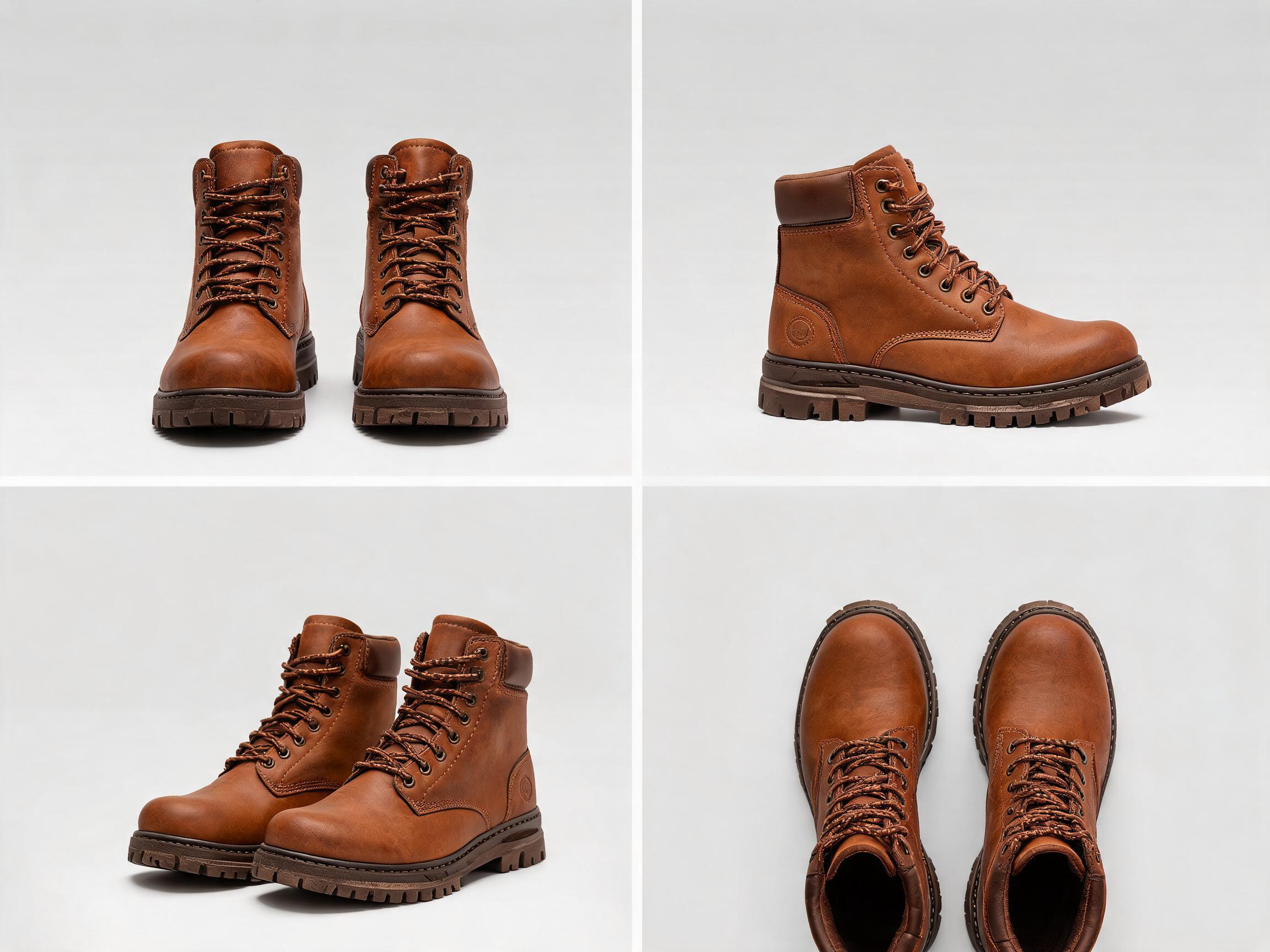
Colour is the other frequent source of rework. A custom colour should be approved against a physical standard, not a screen render. If your brand has a Pantone reference, send it and ask the supplier to approve a colour swatch before bulk production.
2. What the factory should be checking during production
Ask the supplier to explain its inspection stages in plain terms. For this product, the factory describes a three-stage process: incoming material inspection, in-line inspection and finished-goods inspection. Each stage answers a different question, and it helps to know which one covers which risk.
Incoming material inspection
This stage checks leather, lining, insole, outsole, lacing hardware and packaging before anything is cut or assembled. Ask what is recorded for leather (visible defects, thickness, colour match to the approved standard) and for the outsole (compound, hardness, tread pattern). If you are buying a private-label boot, this is also where logo hardware and printed packaging should be checked against your artwork.
In-line inspection
In-line checks catch problems while the batch is still on the line: stitching density and alignment, toe cap placement, outsole alignment, lacing assembly and upper-to-sole fit. Ask how often the line is checked and who signs off. A written in-line record is more useful to you than a verbal assurance, because it shows the batch was actually inspected rather than described as inspected.
Finished-goods inspection
Finished-goods inspection is where the three specific tests for this product are performed on sampled pairs:
- Forefoot flexing test — checks how the boot bends at the ball of the foot, which is where stitching and sole bonding are stressed.
- Colourfastness — checks that the leather finish does not transfer or fade beyond the approved standard.
- Outsole bond strength — a spot check on the strength of the sole-to-upper bond, relevant because this boot uses a stitched and cemented combination.
These are sample-based checks, not a guarantee of every pair. That is normal in footwear production. What matters for a buyer is that the checks are defined, recorded, and available for review, and that the factory can tell you the sampling basis it uses. The product also carries a six-month warranty, and the supplier states a 48-hour response time for quality issues; confirm how claims are handled in practice when you negotiate the order.
3. Planning your own inspection
The supplier accepts third-party inspection. If you plan to use an inspection company, agree the details early, because inspection slots need to be booked against the production schedule.
- Define the inspection standard before booking. Your inspection company will need a written specification and an approved sample to work from. Send both.
- Agree the sampling plan. Confirm the AQL level or sampling method with the factory and the inspection company before the inspection date.
- Check packaging as well as product. Carton quantity (12 pairs per carton), individual boxes, export carton strength, labels and barcodes should all be on the inspection list.
- Photograph the approved sample. Keep a signed sample with photos of the upper, outsole, lacing and packaging. It is the reference for any later discussion.
If you are not using a third party, ask the supplier for the finished-goods inspection record with the shipment. Reading the recorded test results against your specification is a reasonable substitute for a site visit, provided you also inspect a sample on arrival.
4. Commercial terms to settle before the order
The published product page and specification sheet can differ on MOQ and lead time. Treat the quotation you receive from the sales team as the current figure, and put it in the purchase order. Before ordering, confirm in writing:
- Current MOQ per colour and per style, and whether mixed-colour orders are accepted.
- Current lead time measured from order confirmation and deposit, not from enquiry.
- Payment terms and deposit percentage.
- Sample lead time and sample cost, and whether the sample cost is deducted from the bulk order.
- Customisation details — logo placement, packaging artwork, and who approves the final artwork.
- Warranty terms — what the six-month warranty covers and how a claim is submitted.
These are ordinary points, but they are the ones that decide whether the order runs smoothly. A supplier who answers them clearly in writing is easier to work with than one who answers only the price question.
FAQ
Can I order multiple colours in one work boots wholesale order?
The product is offered in brown, black and custom colours. Whether a single order can mix colours depends on the current MOQ per colour, so confirm this with the sales team before you finalise the order.
Can the boots be branded with our logo and packaging?
Yes. OEM/ODM is supported, including logo and packaging customisation. Send your artwork files and packaging specification, and ask for an approval sample before bulk production.
How is the boot packaged for export?
Each pair is packed in an individual box, and boxes are packed in an export carton at 12 pairs per carton. Confirm carton marking, label and barcode requirements with the supplier.
What quality records should I ask for with the shipment?
Ask for the finished-goods inspection record covering the forefoot flexing test, colourfastness check and outsole bond strength spot check, together with the packing list. If you use a third-party inspection company, its report is the primary record.
If you are evaluating this boot for a work boots wholesale program, review the full specification on the Brown Leather Work Boots product page, then request current MOQ, lead time and sample terms from the sales team before placing the order.