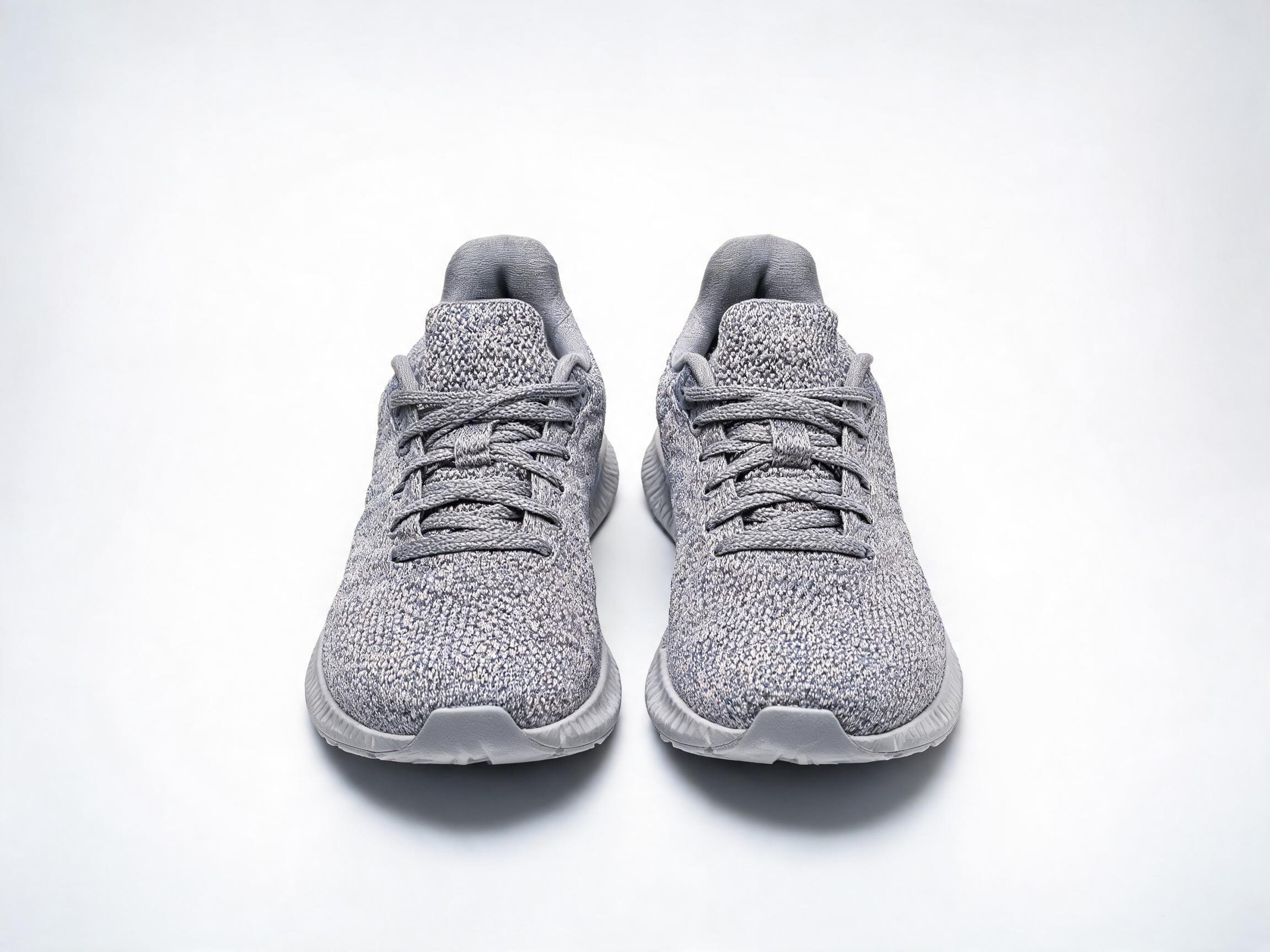
A buyer's guide to silver trainers manufacturing in China: metallic finish options, how colour stays consistent across bulk runs, the sampling process and what really drives MOQ.
What Buyers Get Wrong About Silver Metallic Trainers
Silver trainers are one of the hardest footwear finishes to buy in bulk. The shade that looks crisp in a product photo can arrive dull, patchy, or visibly different from pair to pair once a container lands. For business buyers, the risk is not the concept — it is execution across an entire production run.
Working with a China silver trainers manufacturer is, in practice, a project about three decisions: how the metallic finish is built, how colour is controlled across bulk runs, and how MOQ and sampling are structured before you commit. This guide covers those three areas with the detail a buyer needs to ask the right questions.
How the Metallic Finish Is Actually Built
"Silver trainer" is not one material. It is a family of finishes, and each behaves differently under volume production, abrasion, and cleaning.
Foil transfer and hot stamping. A metallic film is bonded to a coated surface. It produces a bright, mirror-like result with sharp definition. The trade-off: the film sits on top of the substrate, so it can lift at flex points, cut edges, and stitch lines.
Metallic PU or PVC coating. A polymer layer containing metallic pigment is applied to the upper material. It flexes better than foil and is more forgiving on complex panels. Brightness is usually softer, and the surface can scuff to a lighter tone if the pigment sits only near the surface.
Metallic yarns and woven uppers. The metallic effect comes from the yarn itself, so it does not wear off the way a coating can. The look is more textile than liquid metal, which suits some designs and not others.
Metallic printing on mesh or knit. Digital or screen printing with metallic inks gives design flexibility at moderate cost. Durability depends heavily on ink chemistry and the topcoat used.
For a business programme, ask which of these is being used on each panel, not just on the shoe overall. A trainer often mixes three or four finishes, and the weakest panel sets the perceived quality of the whole product.
Colour Consistency Across Bulk Runs
Metallic silver is unusually sensitive to variation. Small changes in pigment batch, spray thickness, curing temperature, and lighting during inspection all shift the read of the colour.
Practical controls that reduce drift:
- Freeze the reference. Approve one physical master sample and one colour standard, both signed and dated. Keep one copy at the factory and one with you. Digital files are useful for communication but should not replace the physical standard.
- Lock the pigment source. If the factory changes metallic pigment supplier or grade between orders, expect a visible shift. Ask that any substitution be approved in writing before production.
- Control film thickness. For coated and sprayed finishes, thickness variation is the single most common cause of patchiness. Ask how thickness is monitored — weight-per-area checks or inline measurement are more meaningful than visual judgement.
- Standardise viewing conditions. Metallic surfaces change dramatically with light angle. Agree a fixed viewing setup — daylight-equivalent lighting, neutral background, fixed distance — so approvals and inspections are comparable.
- Set a tolerance, not a target. No production run is perfectly uniform. Define acceptable limits for shade, gloss, and grain, and state what happens when a batch falls outside them.
A credible China silver trainers manufacturer will already have a view on which of these steps matters most for your specific design. If the answer is "we always match," ask for the method.
Where Metallic Finishes Fail in Real Use
Flex cracking. Foil and hard coatings crack along the vamp crease. If the design has a strong toe-spring or a stiff upper, this appears early. A flex test on the finished shoe — repeated bending at the crease line — is more informative than a flat material test.
Edge and stitch wear. Metallic layers abrade at cut edges, eyelets, and collar bindings. Reinforcing those areas, or choosing a different finish there, avoids the most visible wear points.
Cleaning damage. Many metallic surfaces do not tolerate aggressive cleaning. Buyers shipping to markets where consumers wipe shoes with solvents should ask for a cleaning-resistance check and clear care instructions.
Colour shift under different lighting. A silver that reads neutral in daylight can look blue or warm under retail LEDs. Request photographs and physical samples under both.
MOQ: What Actually Drives the Number
MOQ in footwear is rarely a single fixed figure. It is the sum of several minimums, and buyers who understand them negotiate better.
| Cost driver | Why it sets a floor |
|---|---|
| Upper material | Metallic fabrics and coated materials are often sold by the roll or in fixed lot sizes |
| Outsole and midsole tooling | Open moulds have a per-size minimum; new tooling adds a separate commitment |
| Lasts and patterns | Existing lasts cost little to reuse; new development is a paid project |
| Printing and foiling | Screens, foils, and setup labour favour longer runs |
| Colour matching | Each additional metallic colour adds approval and setup time |
A realistic approach is to ask for the MOQ per colourway and per size run, not just per style. Adding a second metallic colourway often costs more in setup than it does in materials, so consolidating colours is usually the cheapest lever available.
The Sampling Process, Step by Step
A disciplined sampling sequence prevents expensive surprises later.
- Brief and tech pack. Provide sketches, reference images, target weight, construction notes, and intended retail price band. Ambiguity here is the root of most sampling delays.
- Material and finish proposals. Ask the factory to propose two or three finish options with expected durability and cost implications, so the decision is commercial, not just aesthetic.
- First sample (prototype). Typically focuses on shape, last, and construction. Finish quality at this stage is indicative, not final.
- Colour and finish sample. Once construction is approved, produce samples in the intended metallic finish. This is the stage where you should be most demanding about lighting conditions and side-by-side comparison with your standard.
- Wear and flex testing. Walk-test and bend-test the sample. Photograph the crease line before and after.
- Pre-production sample. Made from production materials and processes. This is the sample that should be sealed as the reference for bulk.
- Production and inspection. Agree inspection timing, sampling method, and the acceptance criteria written into the specification.
Ask how long each stage takes and what causes rework. Factories that track their own sample revision rate tend to be more predictable partners.
Questions to Ask Before You Commit
- Which panels use which metallic finish, and why?
- What is the pigment or supplier substitution policy?
- How is colour checked during production, by whom, and against what standard?
- What are the MOQ terms per colourway and size run?
- How many sample rounds are included, and what triggers a charge?
- What are the most common claims on metallic uppers, and how do you reduce them?
Document the answers. A written specification built from these responses is far more useful than a verbal understanding.
Risk Areas Buyers Underestimate
Metallic projects fail more often from process drift than from design. The most common causes are unmanaged pigment changes, approvals made from photographs rather than physical samples, and inspection conducted under inconsistent lighting. Each is inexpensive to prevent and expensive to correct after shipment.
A second, subtler risk is over-specifying brightness. Chasing a mirror finish on a flexible trainer often means accepting poor flex performance. For most commercial programmes, a slightly softer metallic with better flex and abrasion behaviour sells better over time.
Work With a Metallic-Finish OEM Partner
Aurevia Footwear Co., Ltd. is a high-end footwear manufacturer and exporter based in Quanzhou, China, serving global brands, importers and wholesalers since 2011. Our in-house design and sampling teams turn metallic trainer concepts into production-ready samples, and our multi-stage material, construction and finished-shoe inspections keep colour and quality consistent across repeat bulk orders. If you are developing a silver trainers programme for Europe, North America or the Middle East, send us your design references and target quantities for a sampling plan and quotation. For more on this topic, see our guide to custom metallic trainers for B2B buyers.