This article explains the OEM/ODM development process for vegan sandals with a China-based manufacturer. It covers non-animal material substitution options, the sampling cycle, and how MOQ is determined, from the perspective of a factory that specializes in genuine leather and also supports vegan programs. Buyers will learn what to discuss with a factory before committing to production.
When you decide to develop a vegan sandal line with a Chinese factory, the conversation changes from sourcing finished goods to managing a development program. You are not picking from a catalog; you are instructing a manufacturer to substitute materials, build patterns, and run samples. The factory's core expertise and development process determine whether the final product meets your market requirements. This article walks through the OEM/ODM development path for vegan sandals, focusing on material substitution, sampling, and MOQ — from the perspective of a factory that has specialized in genuine leather since 2011 and also supports non-animal-material programs through its design and pattern teams.
- Vegan sandal development is a material-substitution exercise: you replace leather with non-animal options, then adjust construction and fit.
- Sampling for vegan sandals often requires more iterations than leather because material behavior differs.
- MOQ depends on material availability, component sourcing, and production run efficiency for the chosen construction.
- Work with a factory that can prototype quickly and explain the trade-offs of each material option.
Material Choices for Vegan Sandals
Vegan sandals replace animal-derived leather with non-animal materials. The most common categories include:
- Polyurethane (PU) and polyvinyl chloride (PVC) synthetics: widely used for straps, uppers, and linings. They can mimic leather grain and are available in various colors and finishes.
- Textiles: canvas, woven fabrics, and mesh offer breathability and a casual look. They are often combined with synthetic reinforcements.
- Microfiber: a synthetic alternative to suede or nubuck, used for linings and footbeds.
- Natural non-animal materials: cork, jute, hemp, and natural rubber are used for footbeds, midsoles, and outsoles.
Each material has distinct properties that affect durability, comfort, and appearance. In a development program, you and the factory will review these options against your target price, performance expectations, and market positioning. Because the factory's core expertise is genuine leather, it approaches vegan materials as an OEM/ODM capability question: which non-animal material can be sourced consistently, cut and assembled with existing equipment, and finished to your specifications? This is a program-level discussion, not a certification claim.
The Sampling Cycle for Non-Leather Sandals
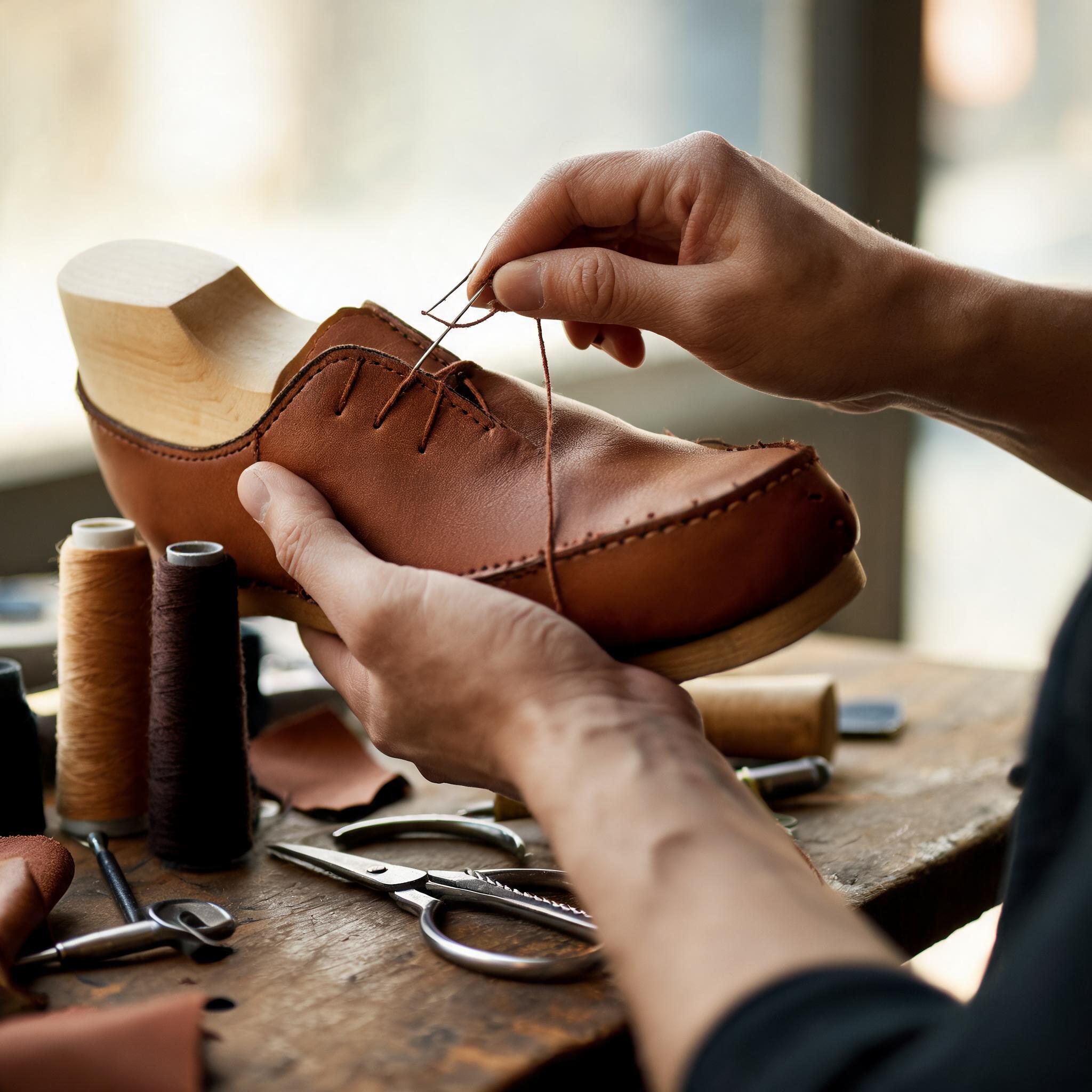
Sampling is where material substitution gets tested. For leather sandals, the factory's pattern makers know how leather stretches, molds, and ages. Vegan materials behave differently: some synthetics have less stretch, some textiles fray, and some footbed materials compress differently. The sampling cycle typically follows these stages:
- Design and specification review: You provide reference samples, sketches, or tech packs. The factory's in-house design and pattern teams translate them into a prototype plan, flagging any construction details that may need adjustment for non-animal materials.
- Material sourcing and confirmation: The factory sources candidate materials — either from its existing supplier network or from mills you specify. Physical samples are sent to you for approval before cutting begins.
- Prototype construction: Pattern makers build the first sample pair. This step often reveals fit and assembly issues unique to vegan materials, such as strap rigidity or lining slippage.
- Fit and wear review: You evaluate the sample on a foot form or with test wearers. Feedback goes back to the factory for adjustments.
- Revision rounds: Depending on complexity, two to four revision rounds are common. Each round refines the pattern, material selection, or component choice.
Because the factory maintains in-house design and pattern teams, sampling cycles can be faster than working with a trading company that outsources development. However, buyers should expect that vegan material development may require additional iterations compared to a standard leather sandal, simply because the material behavior is less familiar to the pattern team. Clear communication and physical material references help shorten the cycle.
How MOQ Is Set in a Vegan Development Program
Minimum order quantity for vegan sandals is not a fixed number. It is determined by several factors that the factory and buyer evaluate together:
| Factor | Effect on MOQ |
|---|---|
| Material availability | Specialty non-animal materials may have higher minimums from the material supplier, which carries over to the sandal order. |
| Component sourcing | Buckles, trims, and proprietary footbeds may require minimum purchase quantities from component suppliers. |
| Construction complexity | More complex assemblies (e.g., multi-layer footbeds) increase per-unit labor and setup time, influencing the economic batch size. |
| Color and size range | Multiple colors or sizes multiply the number of SKUs, each of which may need its own minimum run. |
| Packaging | Custom boxes or printed inserts often have their own MOQs from packaging suppliers. |
In practice, the factory will propose an MOQ based on the specific vegan material and construction you select. This MOQ is a program-level decision, not a universal figure. Buyers should ask for a breakdown of how MOQ changes if they switch materials, reduce color options, or simplify the design. The factory's role is to make these trade-offs transparent so you can align the order with your inventory and cash flow plans.
What to Look for in a Manufacturing Partner
When developing vegan sandals, the factory's development capability matters more than its existing product catalog. Look for:
- In-house design and pattern teams: They can adapt patterns for non-animal materials and iterate quickly.
- Material sourcing flexibility: The factory should be able to source both standard synthetics and specialty vegan materials, or work with your nominated suppliers.
- Transparent sampling process: Clear communication about sample lead times, revision costs, and material testing.
- Experience with OEM/ODM customization: A factory that regularly develops custom programs will have a structured process for material substitution and MOQ negotiation.
Aurevia Footwear Co., Ltd., based in Quanzhou, has been a genuine leather specialist since 2011 and employs approximately 260 staff. While its core expertise is leather footwear, it supports OEM/ODM customization for vegan sandals through its in-house design and pattern teams. Buyers are encouraged to discuss vegan material options as a program-level capability question, and to verify all material specifications and claims directly with the factory.
FAQ
Can a leather-focused factory develop vegan sandals?
Yes, if it has in-house design and pattern teams and material sourcing flexibility. The development process is similar, but material substitution requires testing and adaptation. It is best to treat vegan materials as a new program rather than a simple swap.
How long does sampling take for vegan sandals?
Sampling time depends on material availability and the number of revision rounds. For vegan materials, expect additional iterations compared to a standard leather sandal. The factory can provide a timeline after reviewing your design and material requirements.
Is MOQ higher for vegan sandals than for leather sandals?
Not necessarily. MOQ is driven by material minimums, component sourcing, and production efficiency. Some vegan materials may have higher supplier minimums, but the factory will calculate MOQ based on your specific program. Discuss options to adjust MOQ by simplifying the design or consolidating colors.
What information should I prepare before contacting a factory?
Prepare reference samples or sketches, target materials (if known), expected order quantity, target market, and any performance requirements. The more detail you provide, the faster the factory can assess feasibility and propose a development plan.
Developing vegan sandals with a China manufacturer is a collaborative process. By understanding material choices, the sampling cycle, and MOQ drivers, you can have a more productive conversation with your factory and move from concept to production with fewer surprises. For further reading, see our articles on vegan sandals wholesale sourcing and how to vet a vegan sandal wholesaler in China.